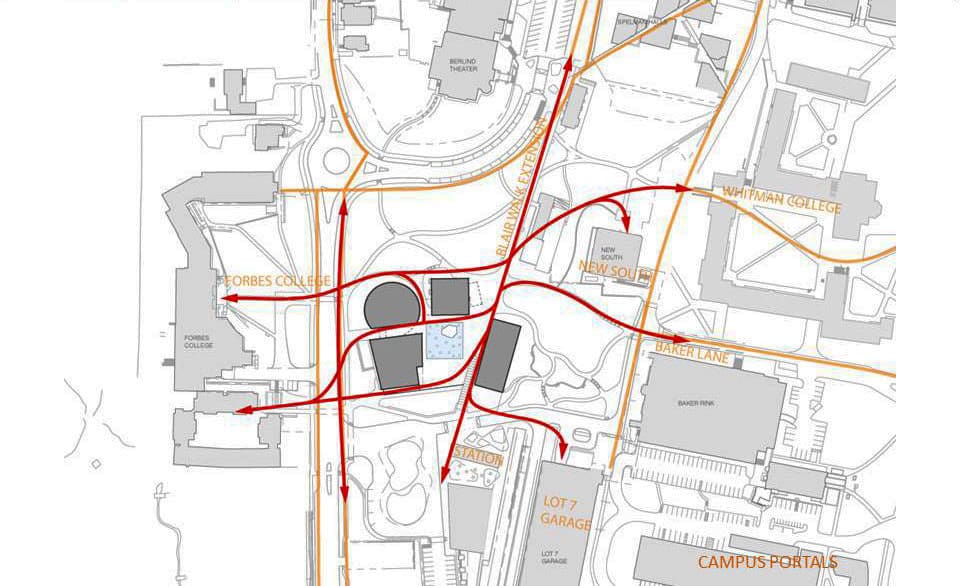
Founded in 1746, Princeton University’s campus has long embodied the ideals of academic and architectural excellence, with a master plan distinguished by its generous open spaces and varied architectural styles. The Lewis Arts Complex, designed by Steven Holl Architects in partnership with BNIM, is the centerpiece of the University’s current master plan. Located on the southern edge of campus, the complex serves as a dramatic new portal connecting the University to the surrounding community and marking the primary point of arrival from the nearby transit hub. The creation of an arts and transit neighborhood—more fully integrating campus and community—was a key component of the University’s Campus Plan: a 22-acre development that includes the Lewis Arts Complex, two restaurants, a convenience store, and the relocated NJ Transit regional rail station.
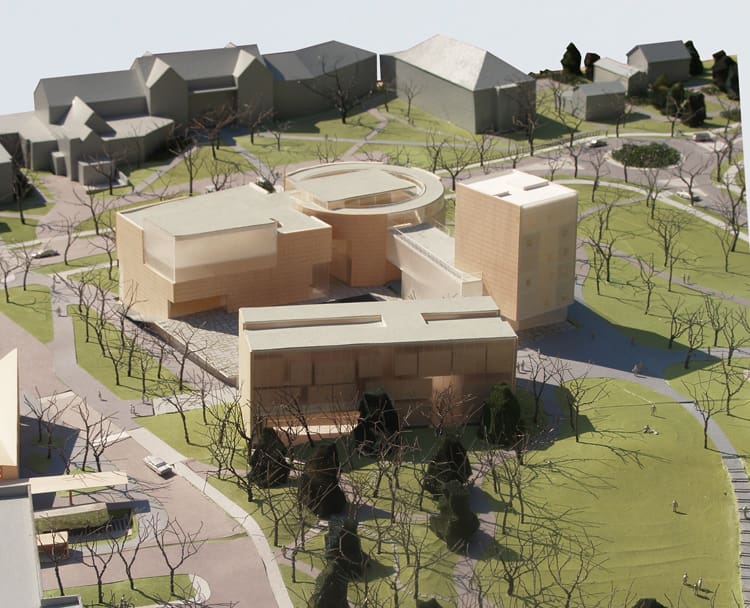
Situated in a park-like setting adjacent to the McCarter Theatre Center, the Lewis Arts Complex fosters the “arts neighborhood” and houses the Lewis Center for the Arts’ Programs in Dance, Theater, Music Theater, and the Department of Music, as well as the Princeton Atelier—a unique academic program at Princeton University that fosters collaborative, interdisciplinary artmaking.
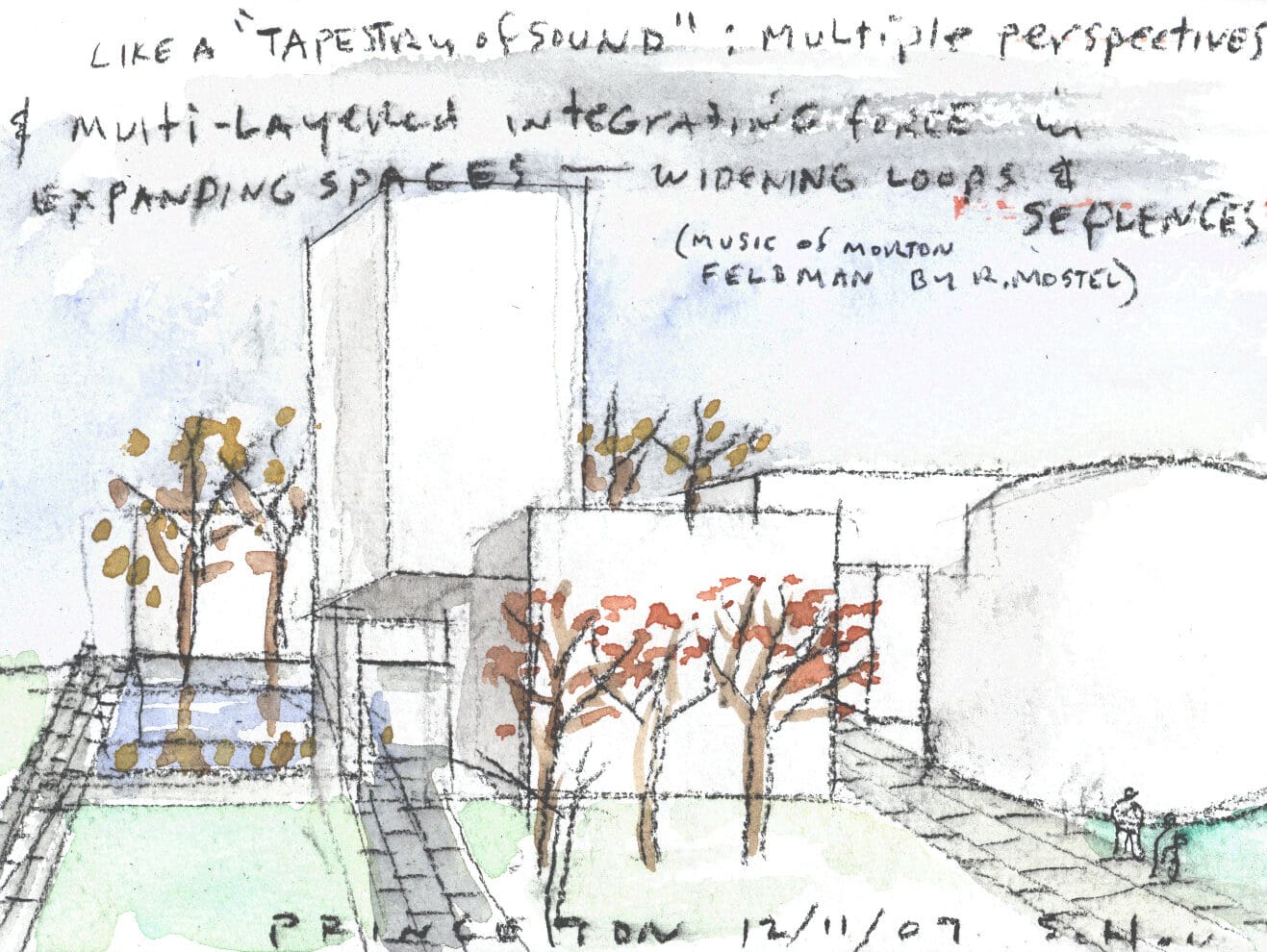
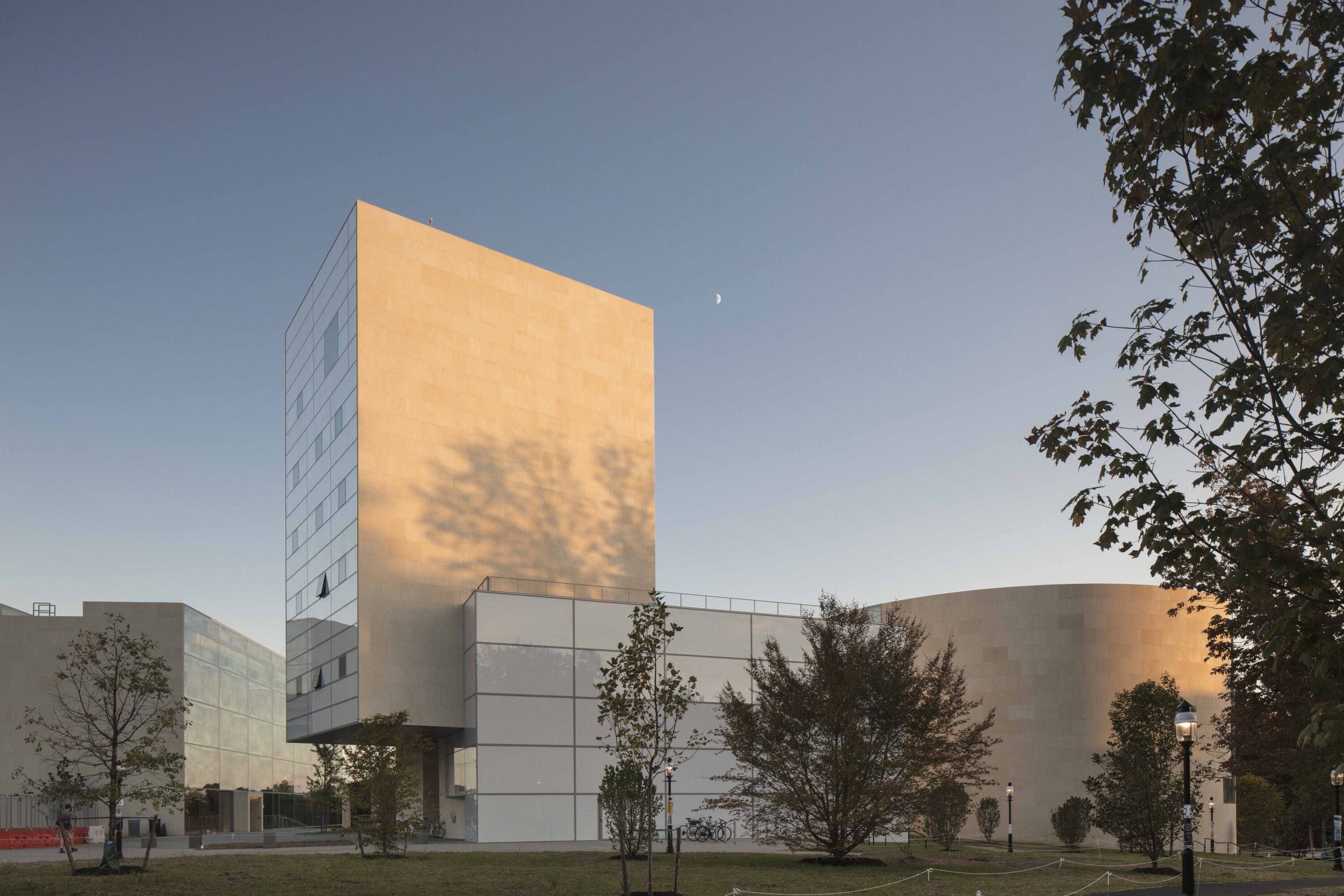
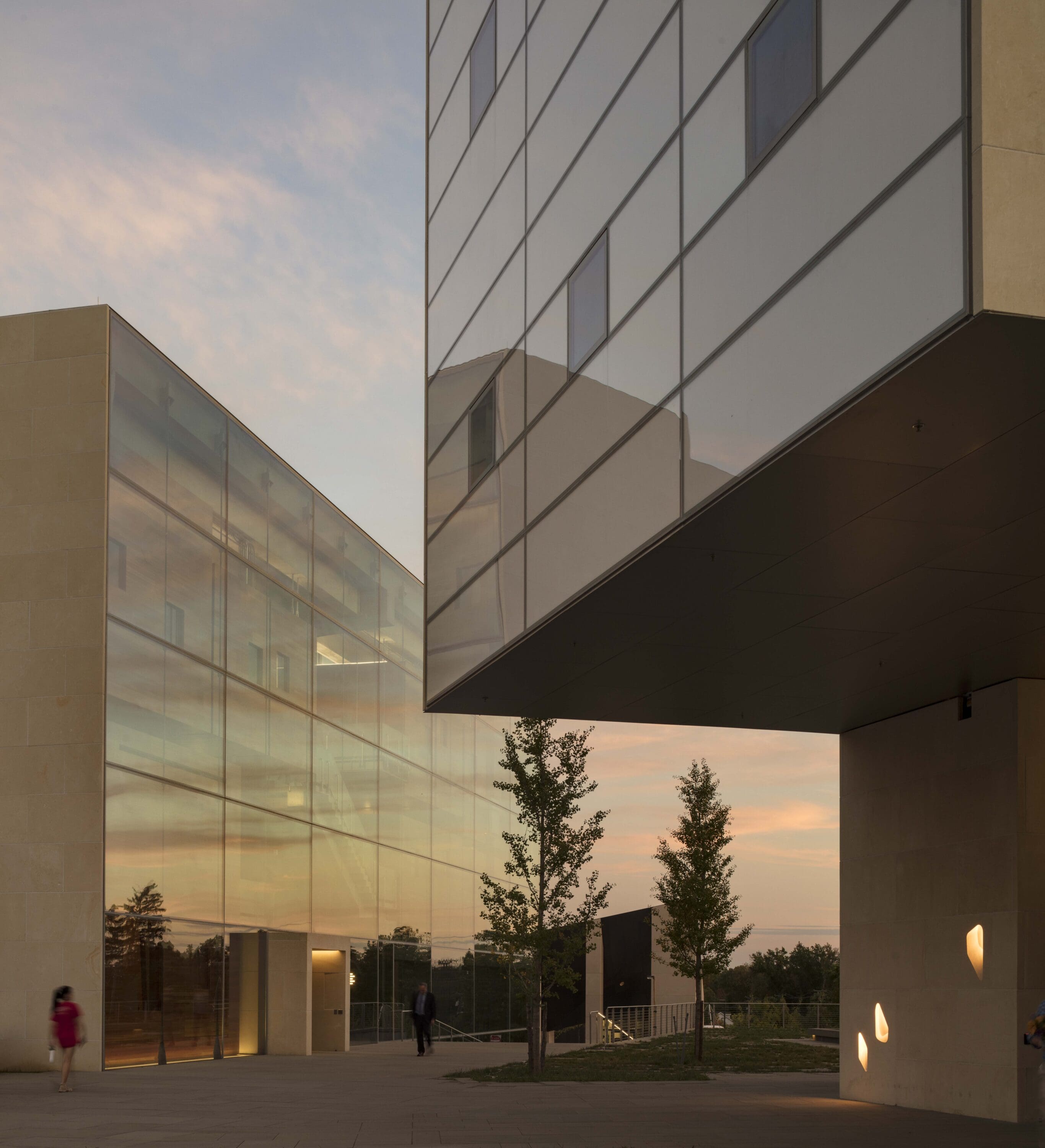
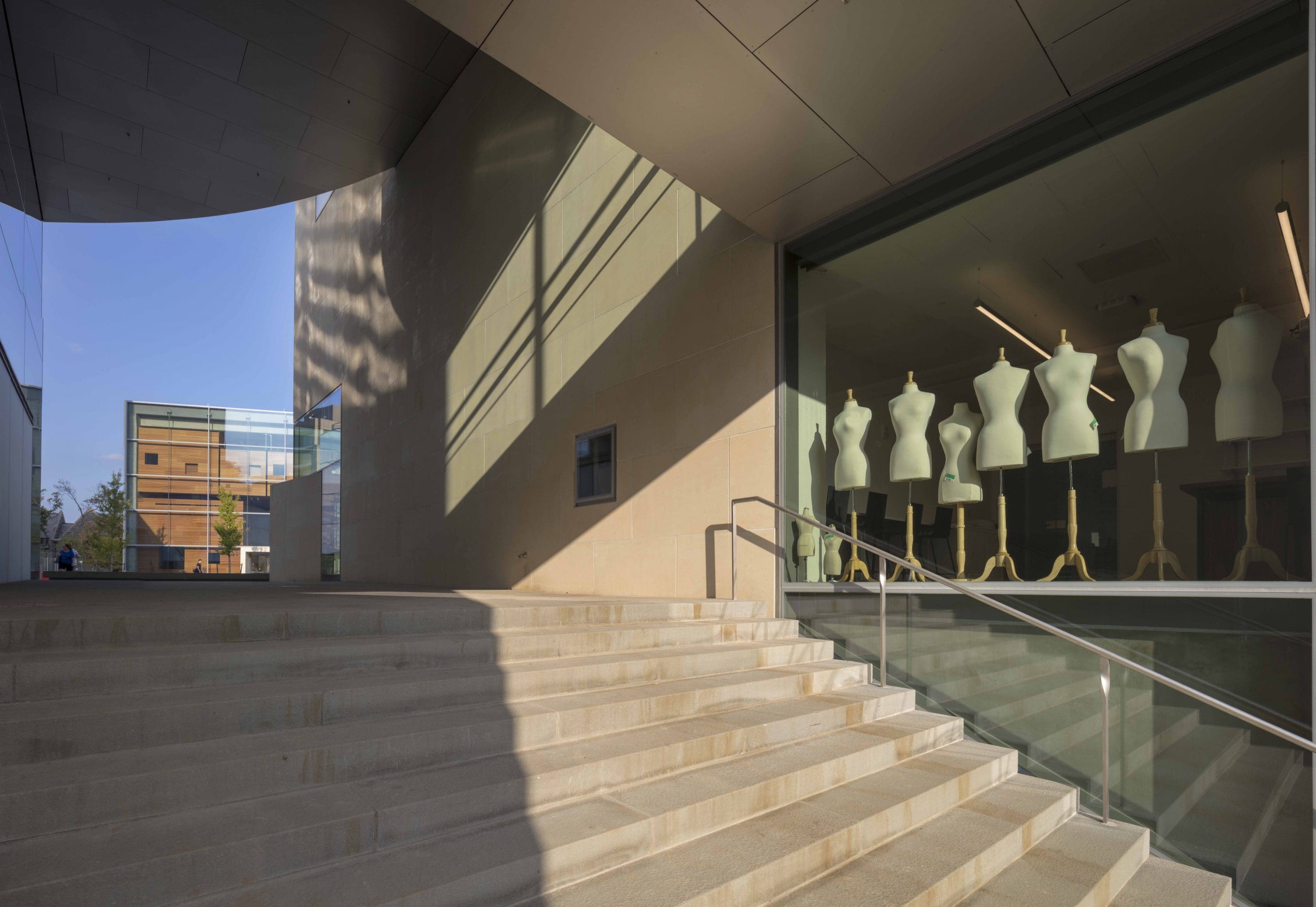
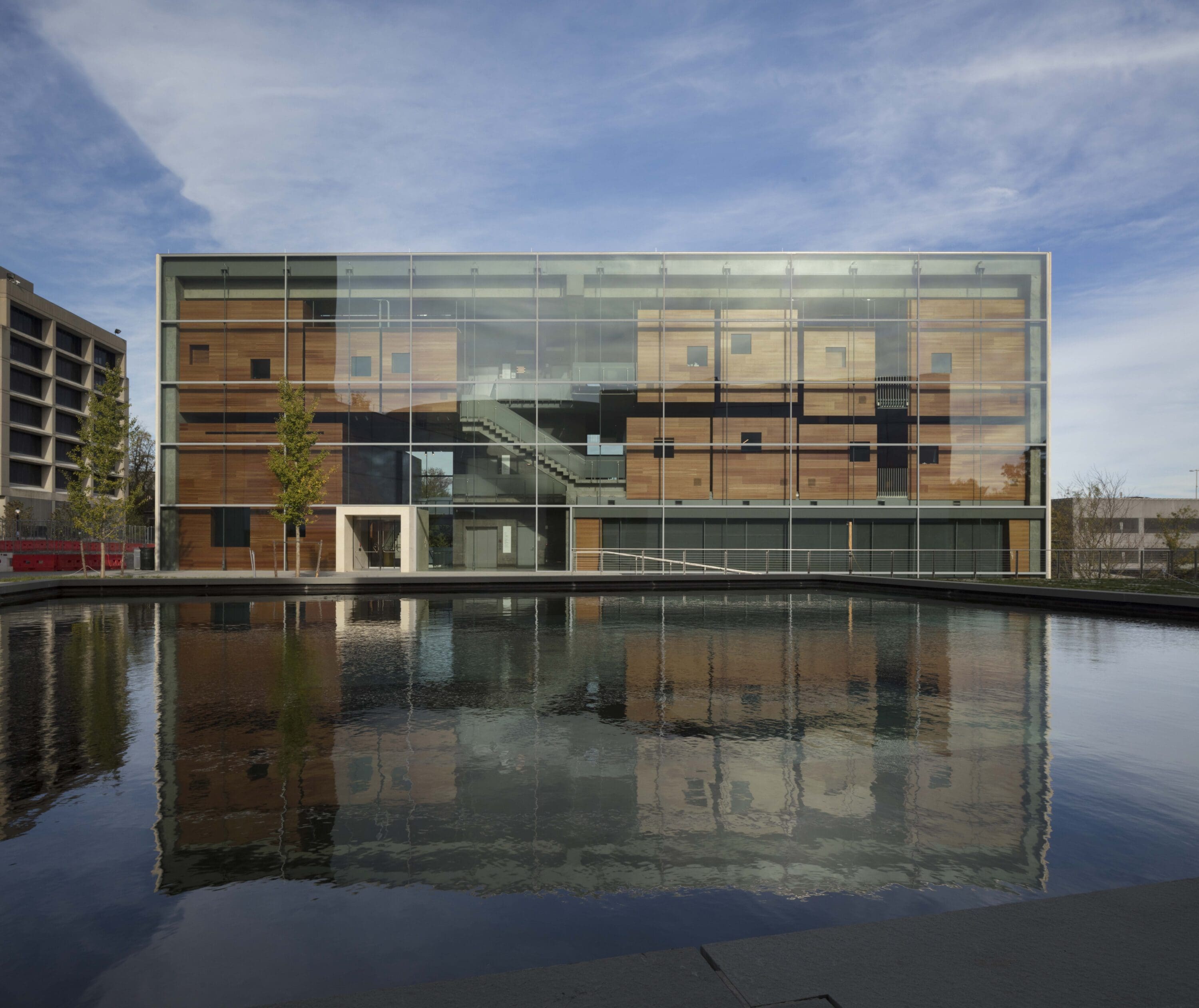
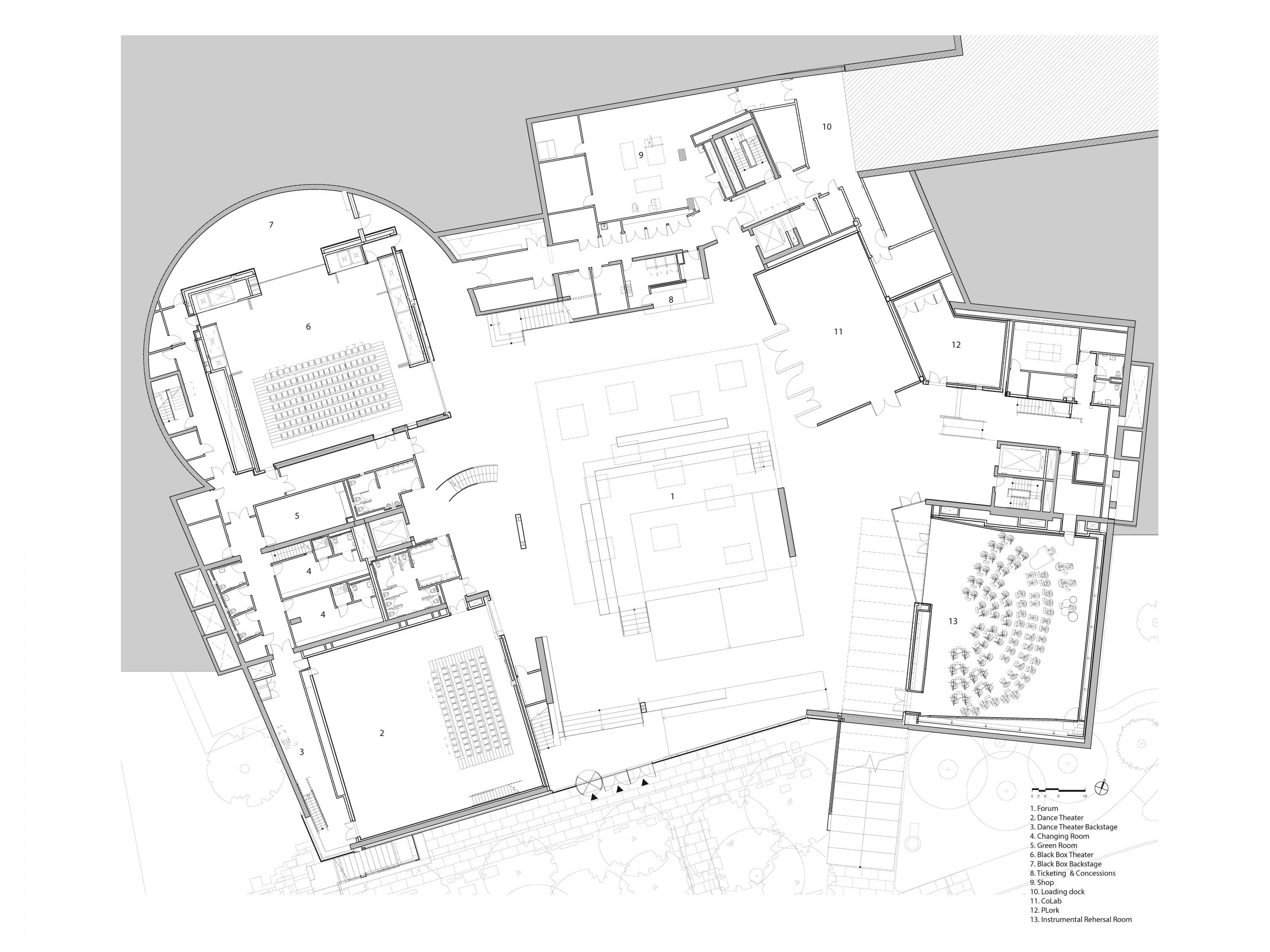
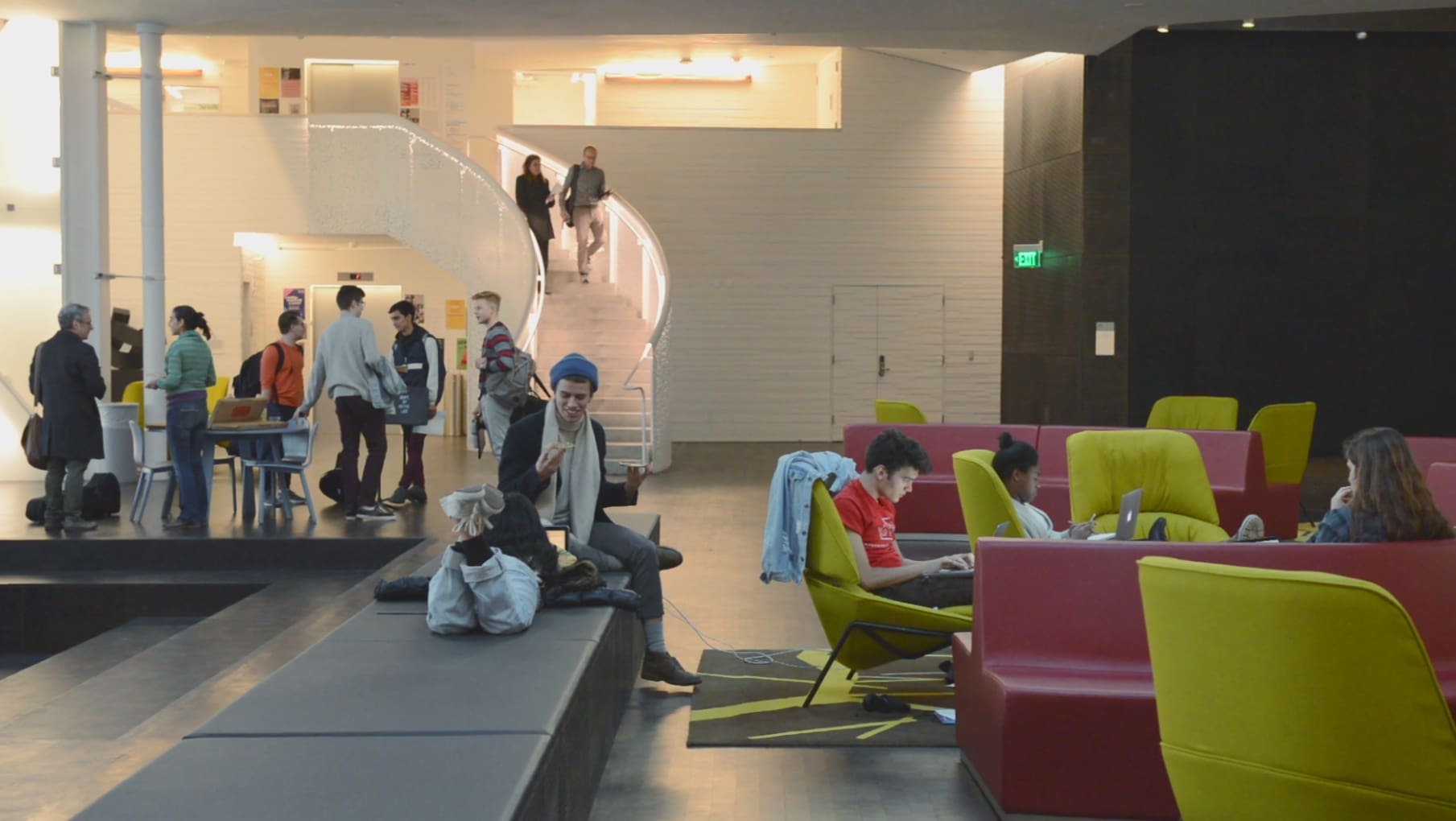
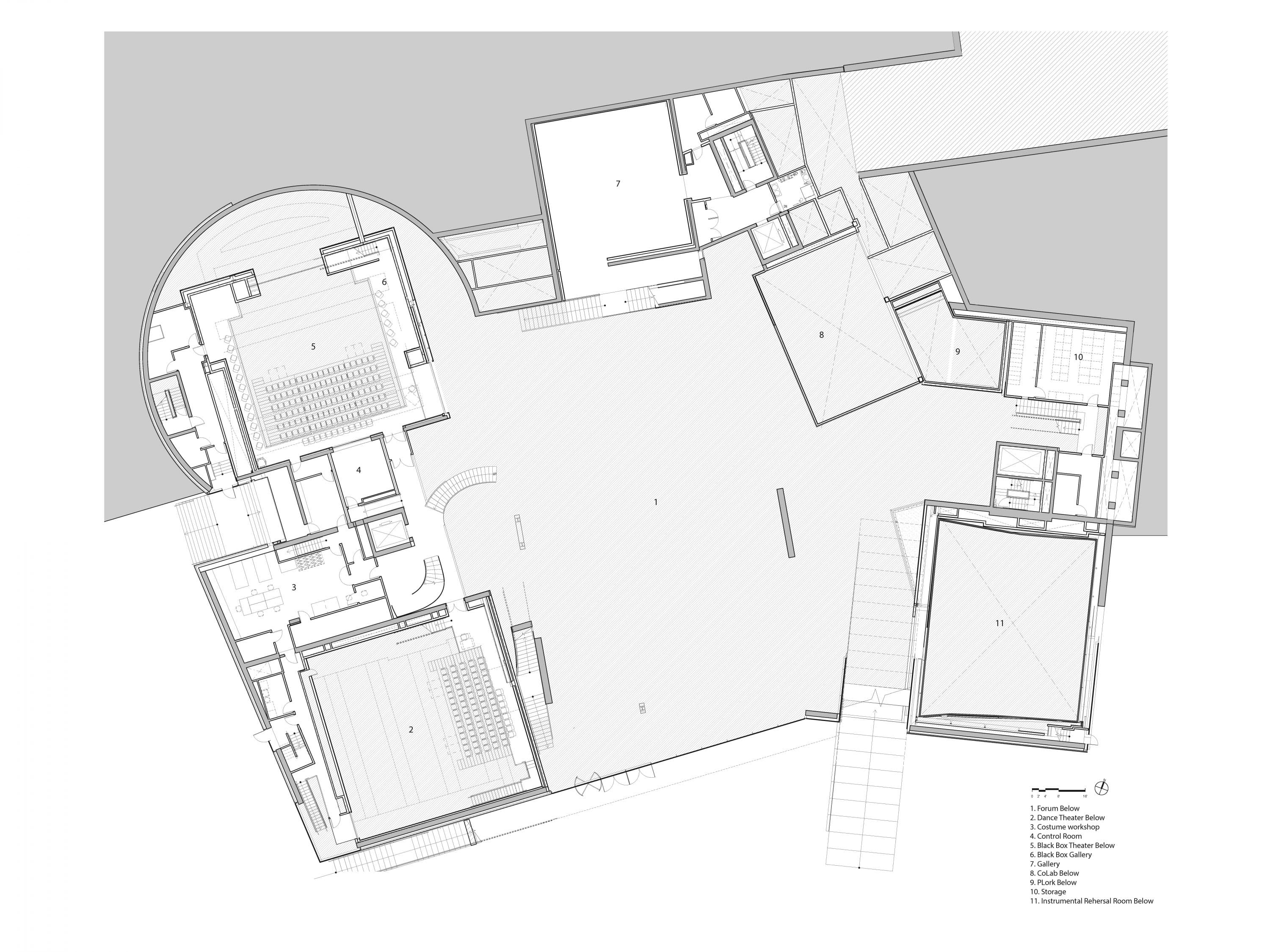
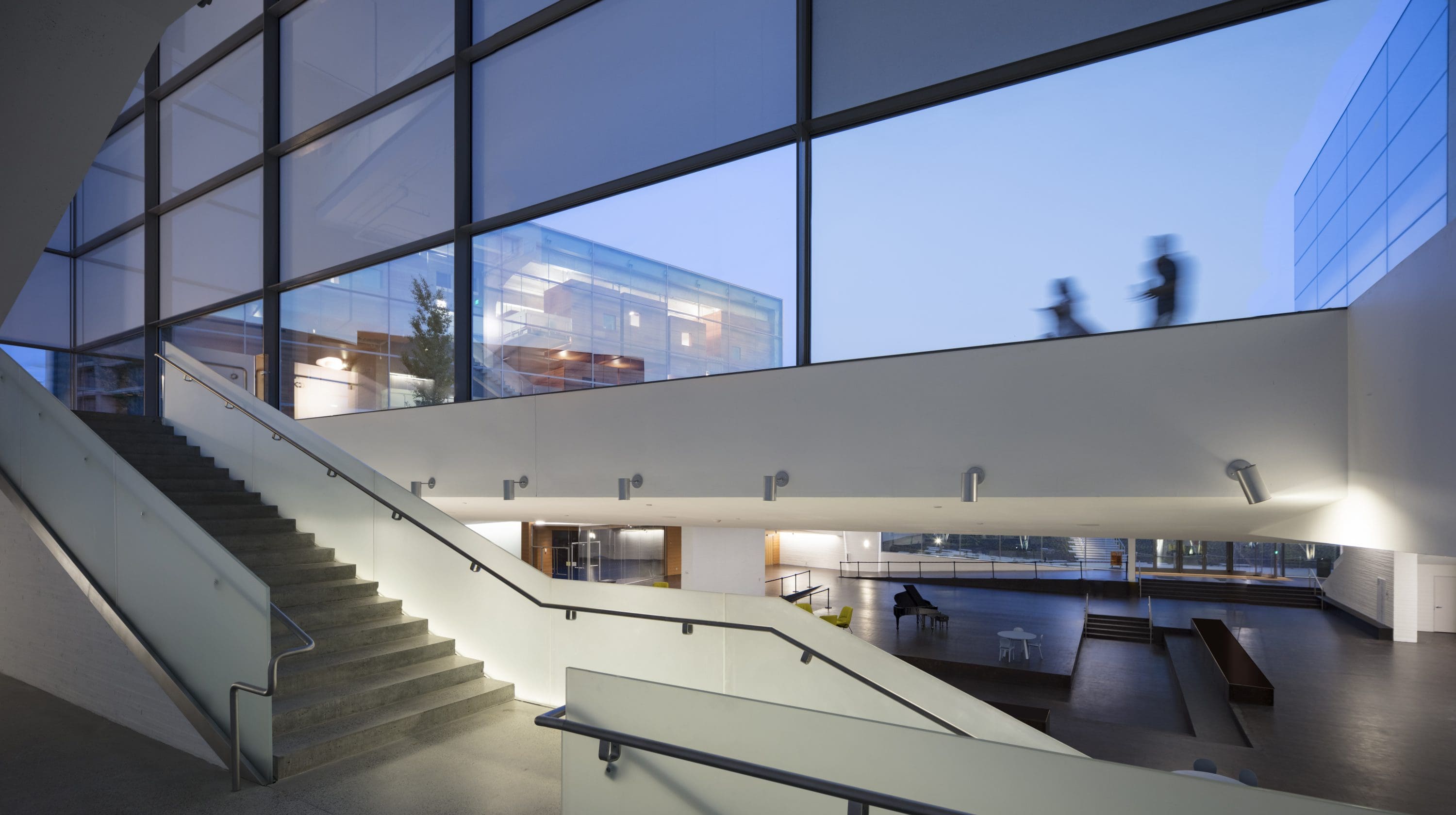
The complex comprises three structures: the Wallace Theater and Dance Building, the Arts Tower, and the New Music Building. These are unified below ground by the Forum, an 8,000-square-foot indoor gathering space that functions as a lobby for the various venues and supports interdisciplinary interaction.

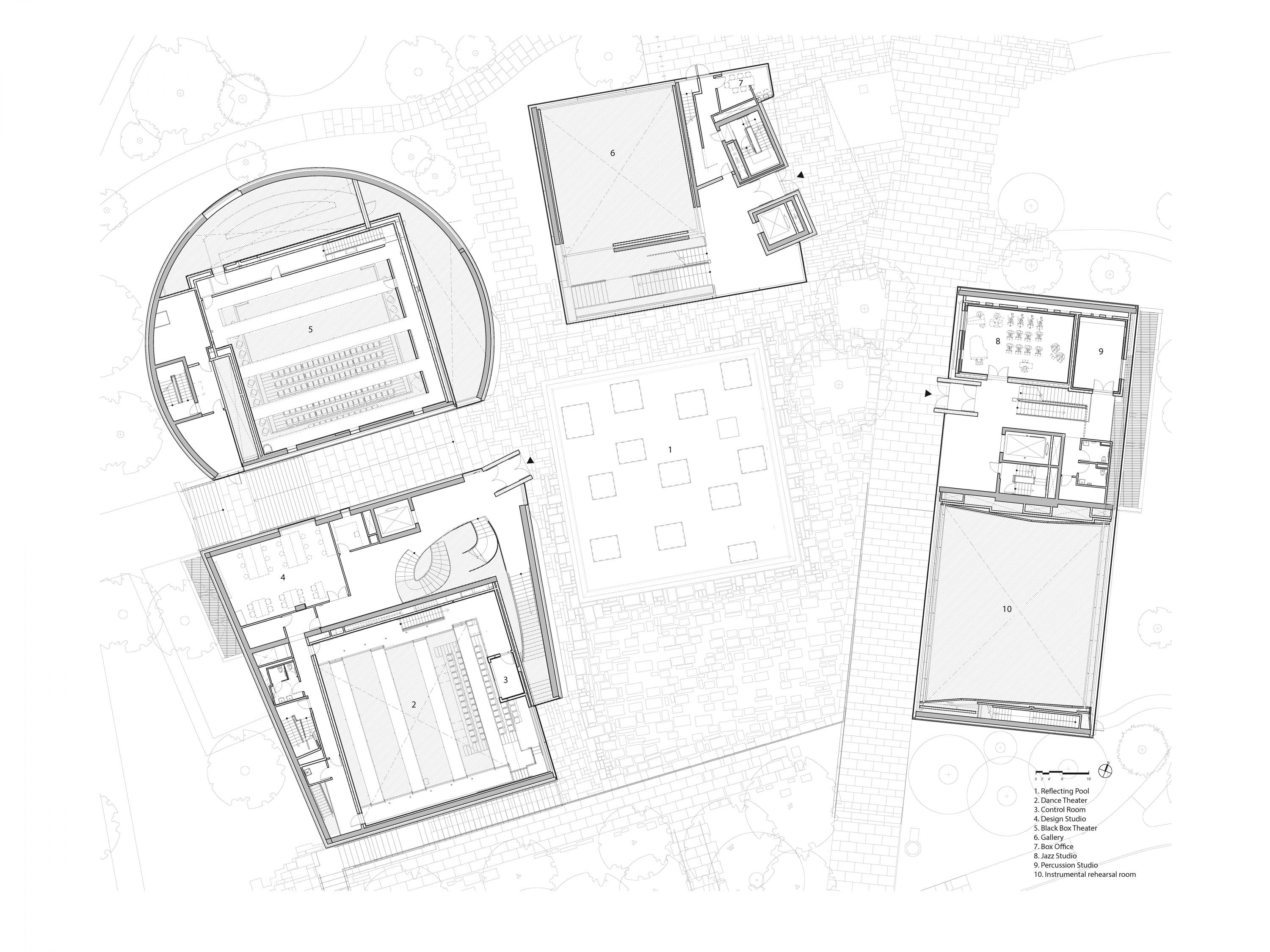
Each of the three buildings is uniquely developed according to distinct architectural concepts:
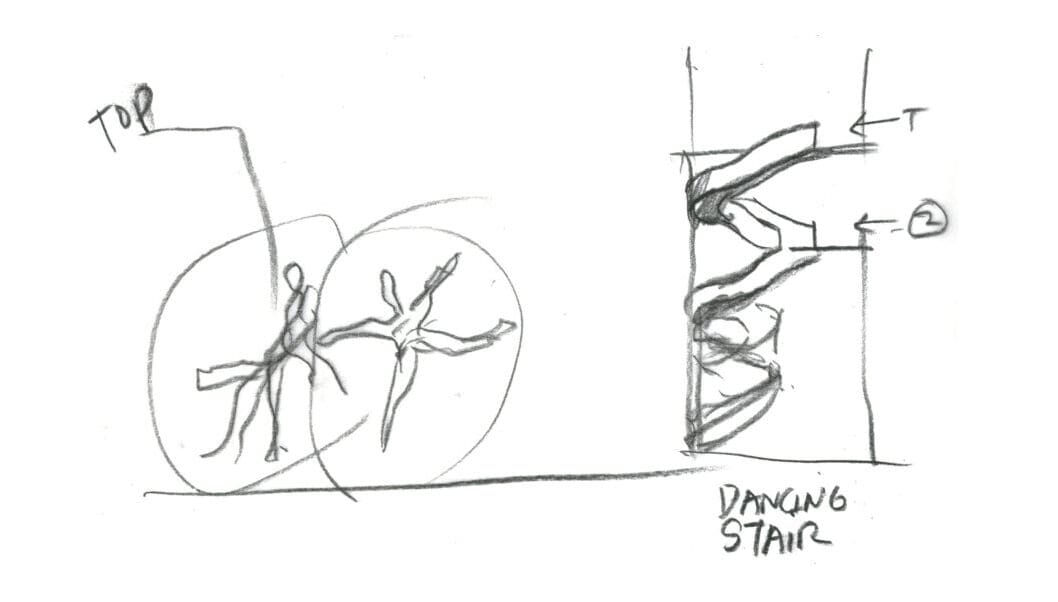
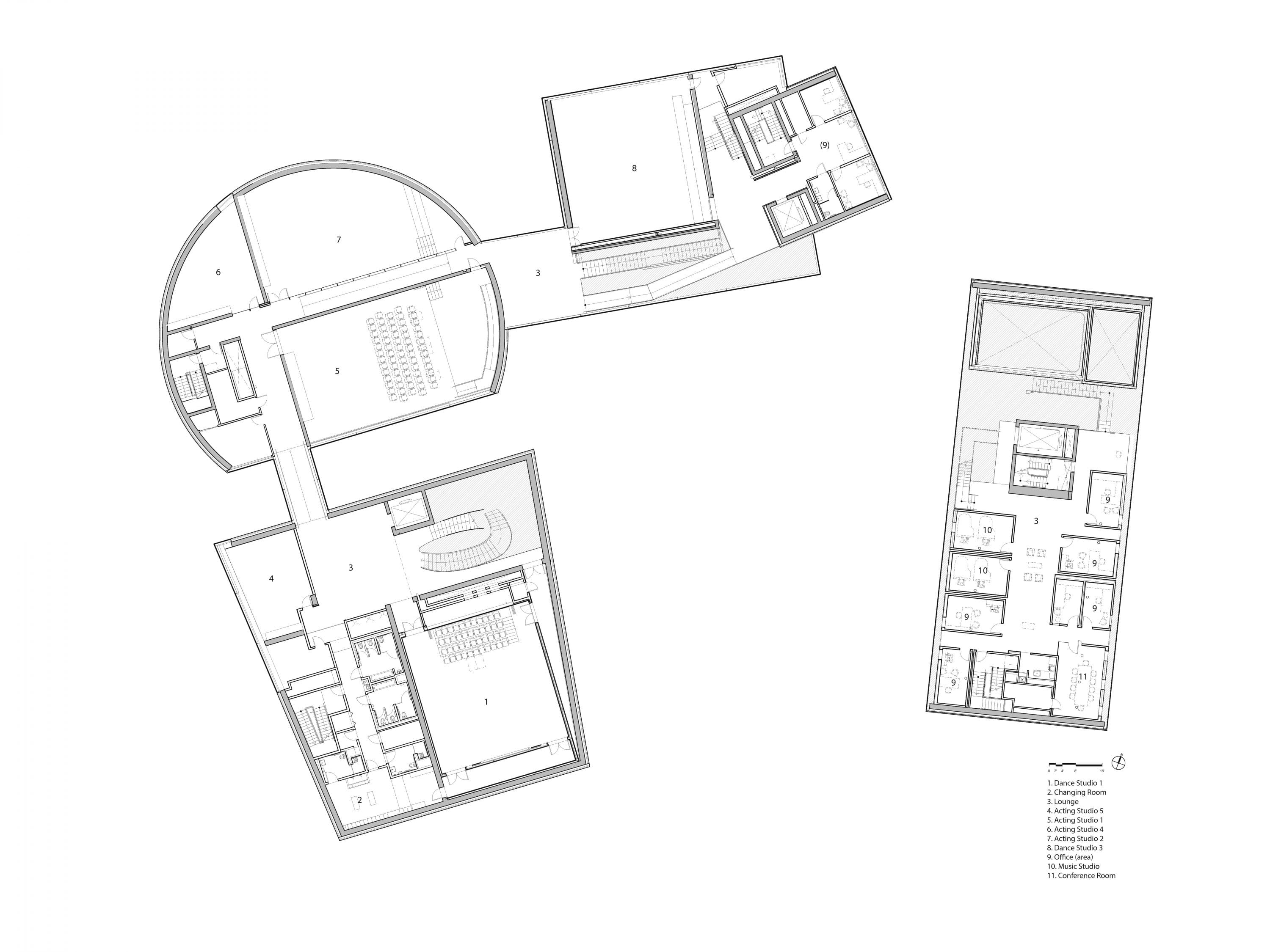
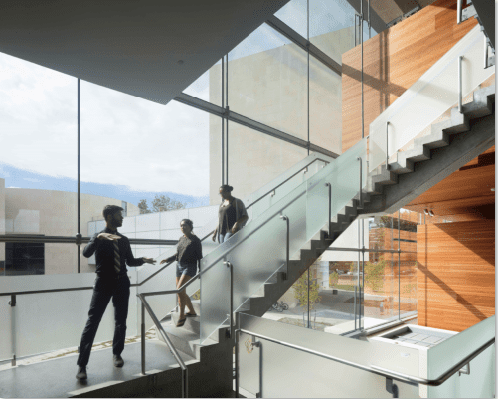
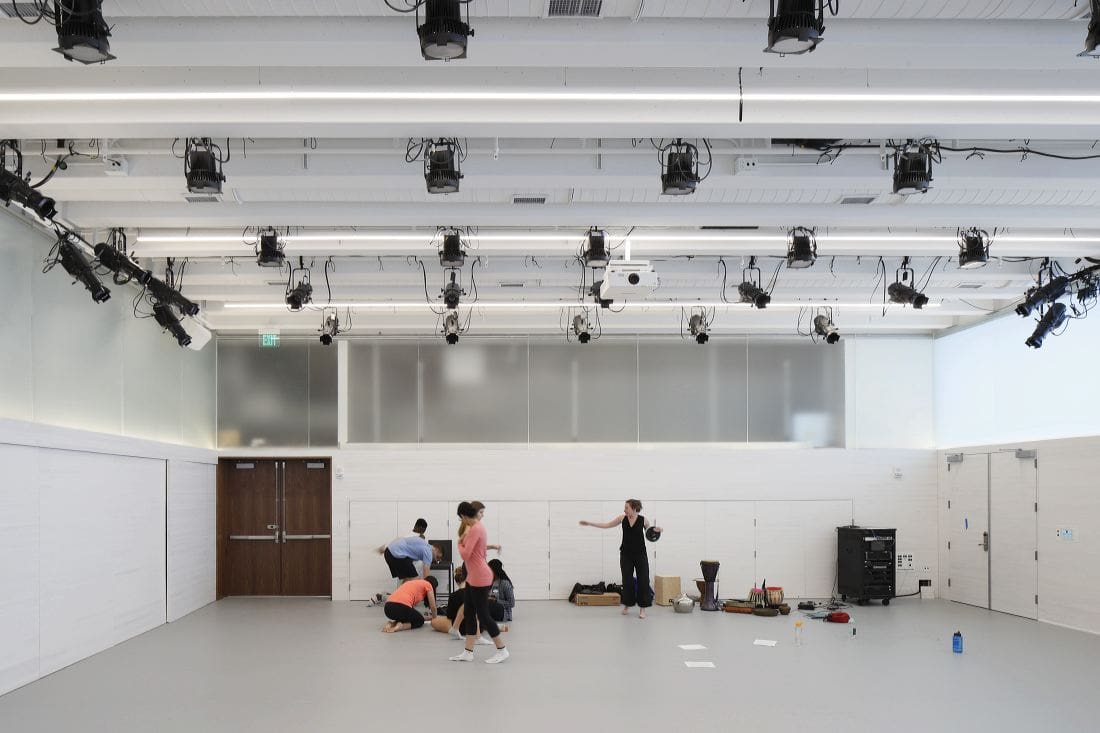
- The Wallace Theater and Dance Building is designed around the idea of a “thing within a thing.” A concrete frame encloses the building, while internally, the black box theatre is constructed of steel. Dance theatres feature foamed aluminum, whitewashed wood, and board-formed concrete. A sculptural “dancing stair” connects the different levels.
- The Arts Tower is a concrete and stone structure that visually and physically connects to Princeton’s historic Blair Arch. It includes the Hurley Gallery, administrative offices, and additional studios.
- The New Music Building explores the concept of “suspension.” Individual practice rooms are suspended above a large orchestral rehearsal hall, ensuring ideal acoustic separation and optimal sound performance.

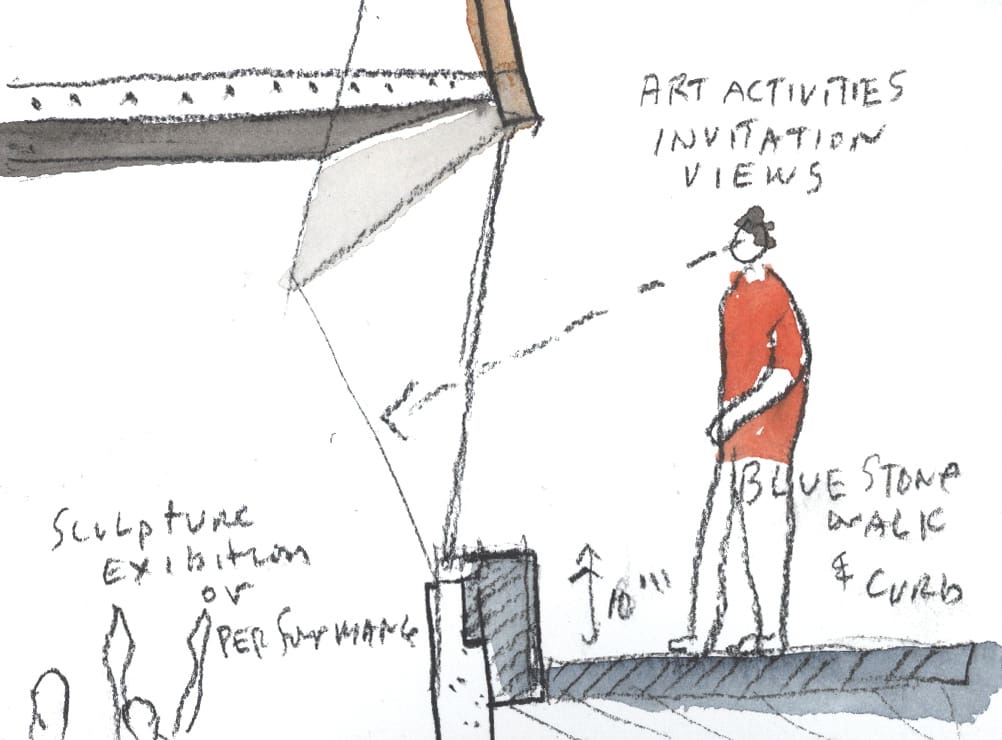
Above the Forum is an outdoor plaza that doubles as a planted pavement green roof. At its center lies a 4,500-square-foot reflecting pool, featuring twelve skylights that bring natural light into the Forum below.
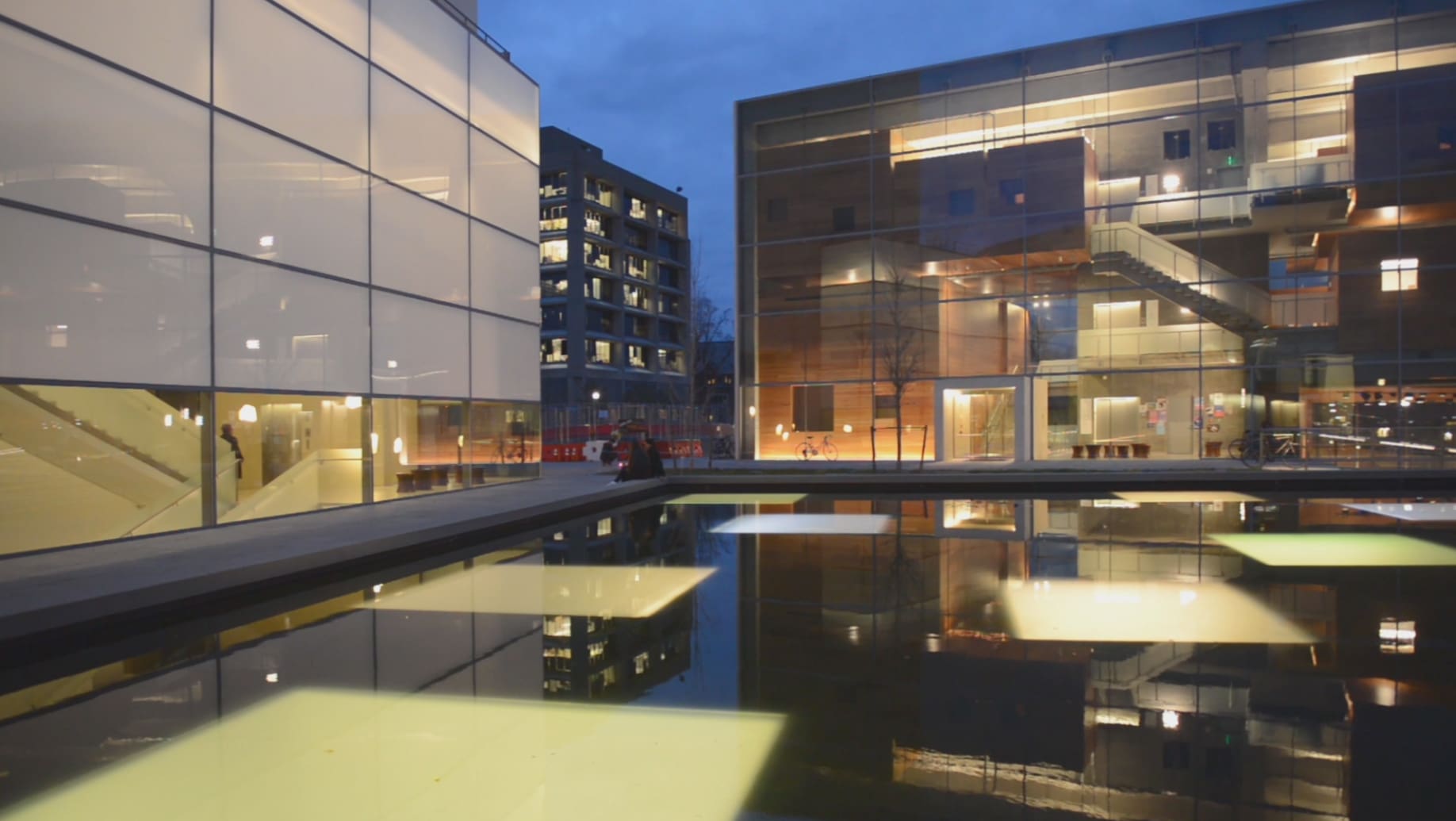

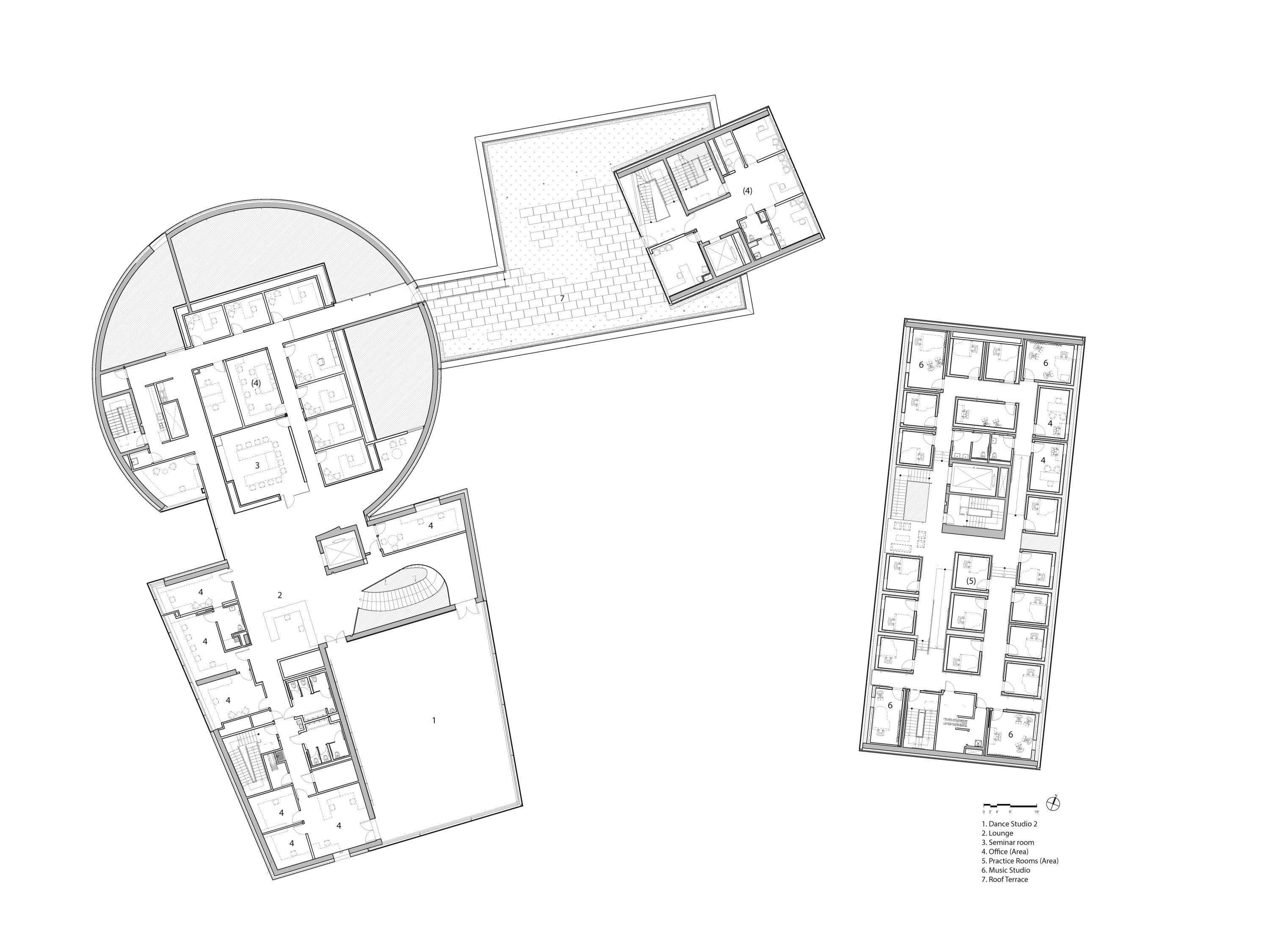
Numerous town hall meetings shaped the design through a robust participatory process, ensuring the facility’s resonance with both University and community stakeholders. Since its completion in 2017, the Lewis Arts Complex has stood as a state-of-the-art facility for the creative and performing arts, and a vibrant cultural gateway for both Princeton University and the surrounding community.




Steven Holl (design architect, principal)
Noah Yaffe (partner in charge)
Christina Yessios (project architect, associate)
Nathan Rich (project architect)
JongSeo Lee (project architect, senior associate)
Whitney Forward (assistant project architect)
Chris McVoy (project team, senior partner)
Martin Kropac, Scott Fredricks, Alfonso Simelio, Arseni Timofejev, Michael Haddy, Yasmin Vobis, Zach Cohen, Jing Han, Laetitia Buchter, Ying Yi Cai, Gary He, Asami Takahashi, Ebbie Wisecarver, David Alan Ross (project team)