“Out of time and into space.” —John Hejduk
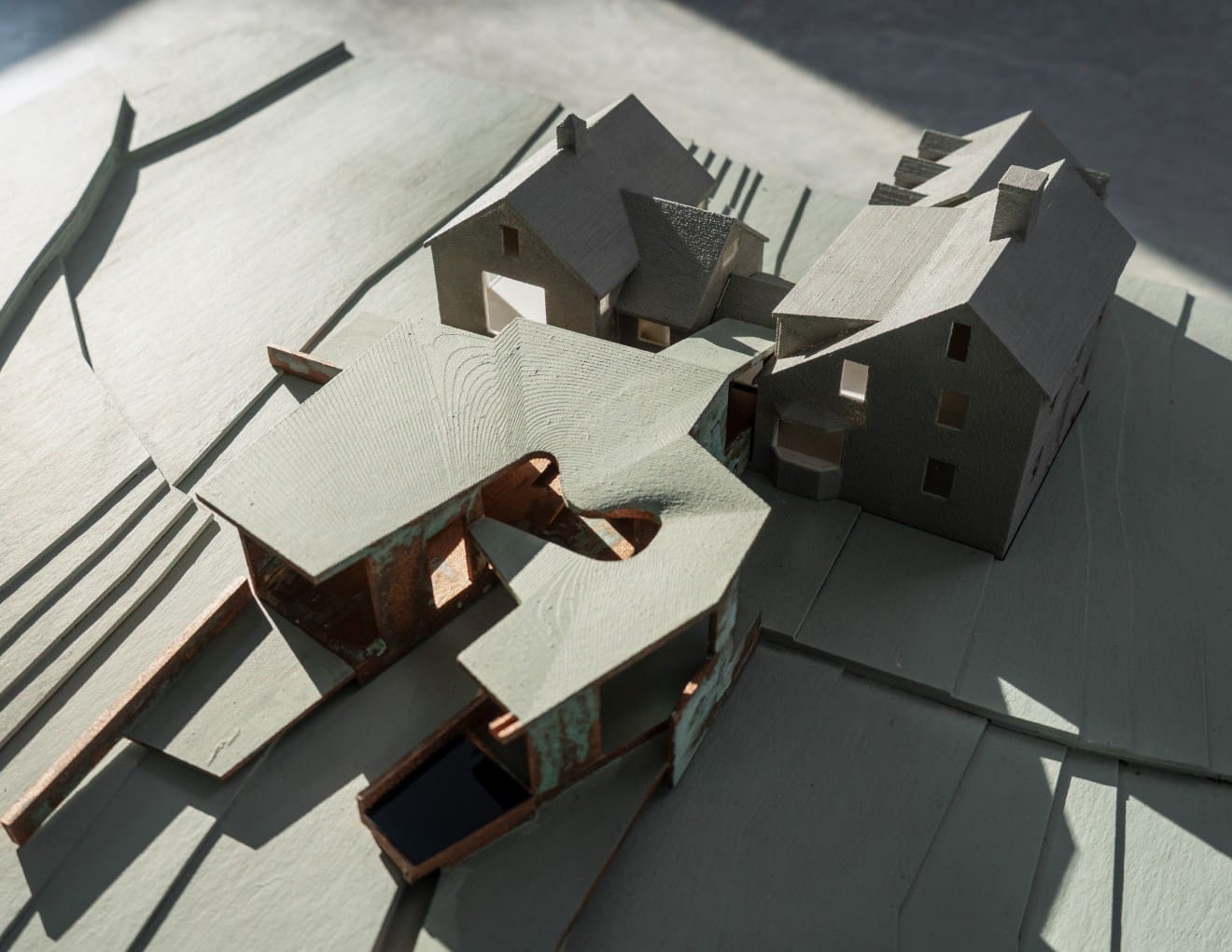
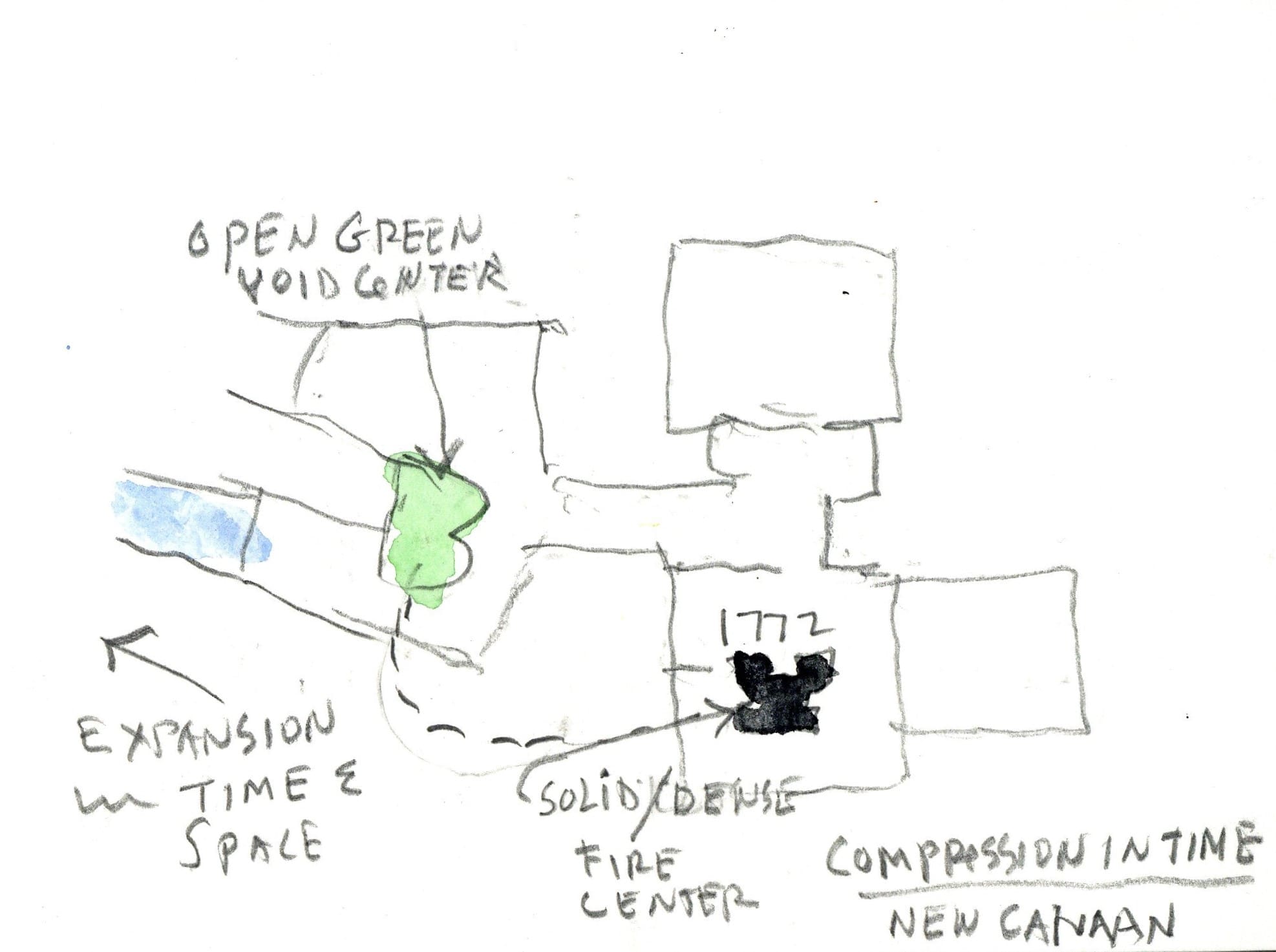
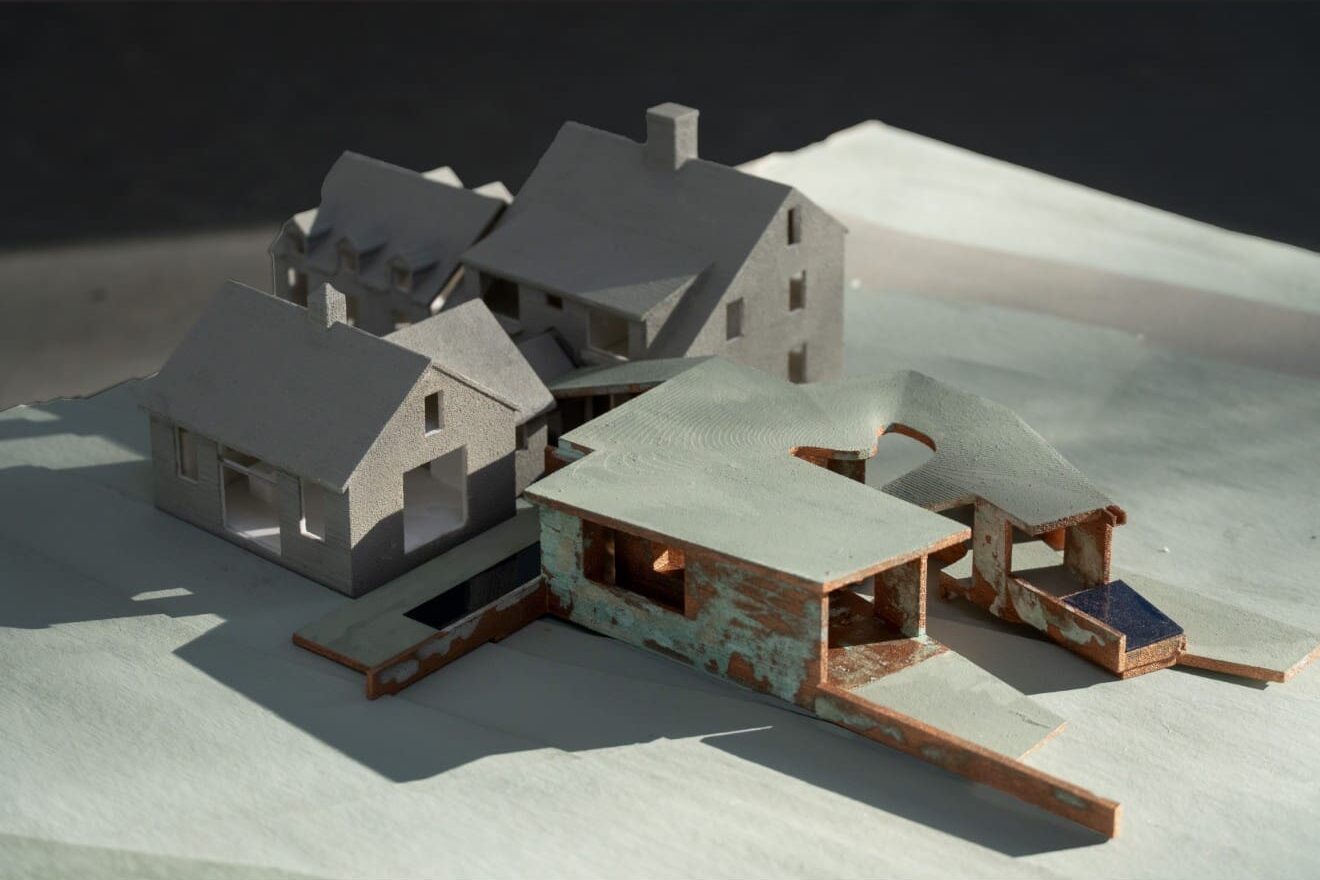
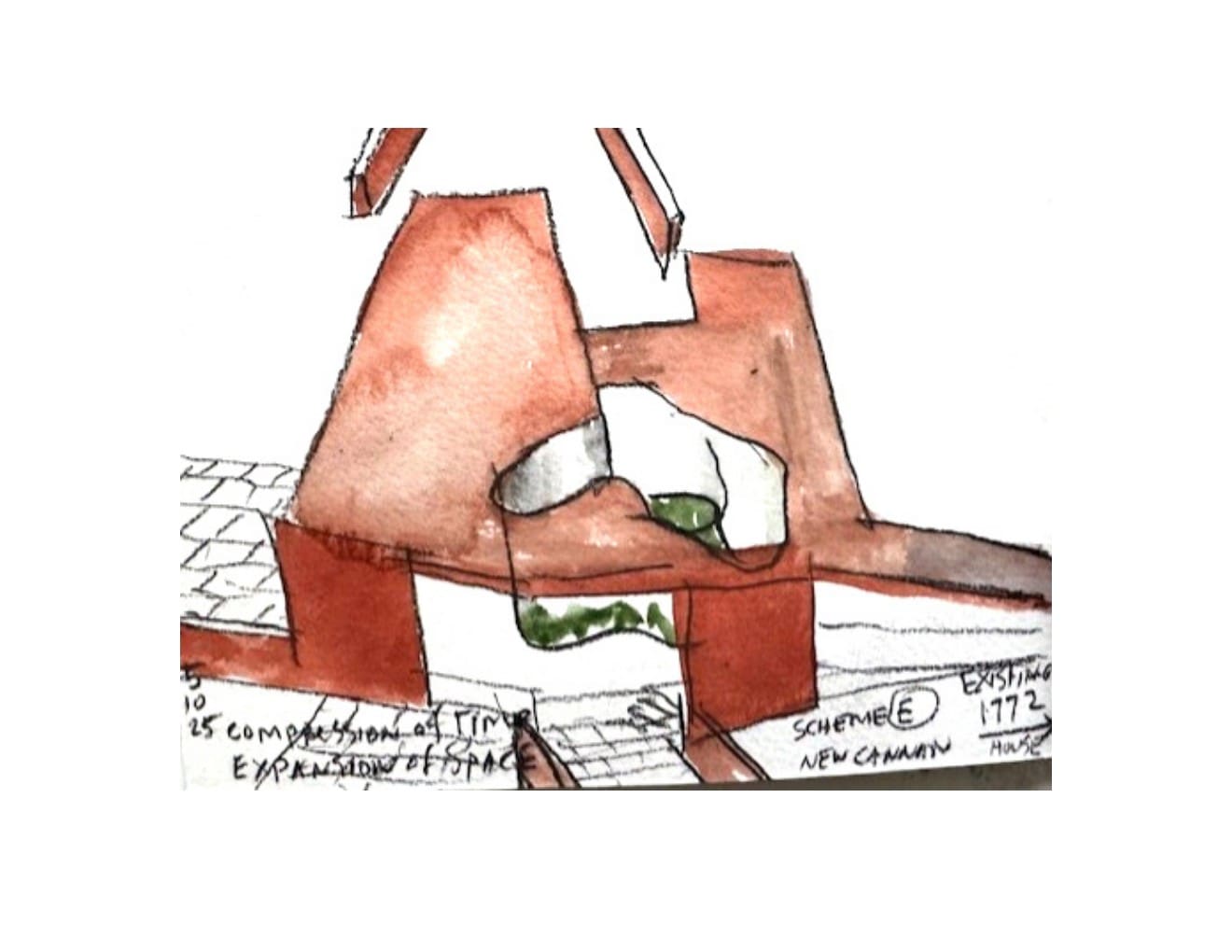
The architectural vision for this house in New Canaan, CT is rooted in a “compression in time.” Its layered construction—1772, 1956, 2002—offers a material record of evolving perception. While earlier additions looked backward in architectural sympathy, the new expansion shifts from historical imitation to spatial unfolding.
The original 1772 structure pulled space inward, anchored by three masonry hearths. Where the hearth once defined the center, the new architecture opens around light and flow—replacing compression with expansion, stillness with motion. This is not just a physical evolution but a philosophical one: from containment to continuity.
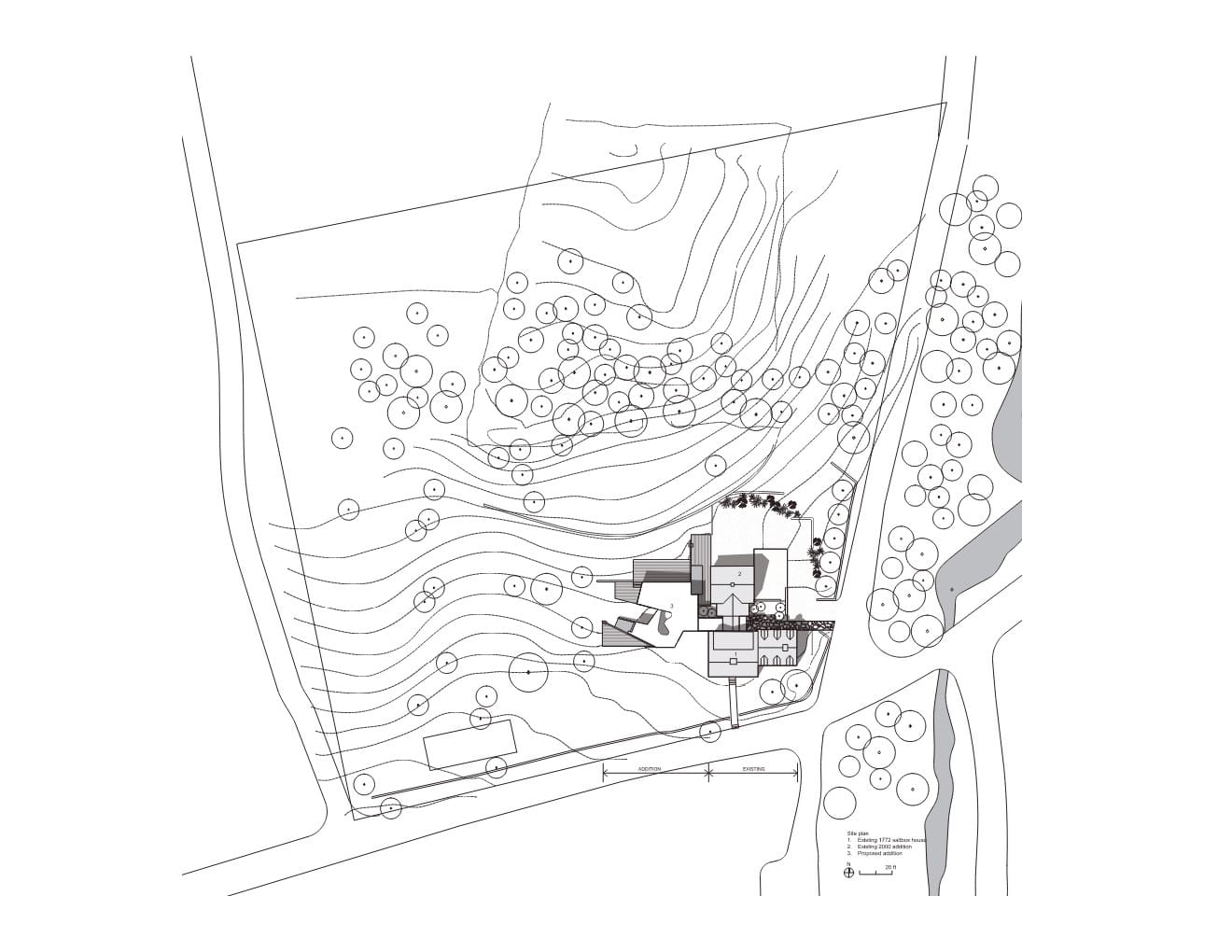
An 800-square-foot addition stretches outward, engaging the landscape. Diagonal and extended orthogonal geometries shape the form, while super-insulated translucent glass admits only 19% of sunlight—transforming daylight into a soft, Zen-like presence. Rainwater is collected, light is reflected from a courtyard pond, and heating and cooling are powered by a single geothermal well, replacing fossil fuel with a silent, sustainable core.
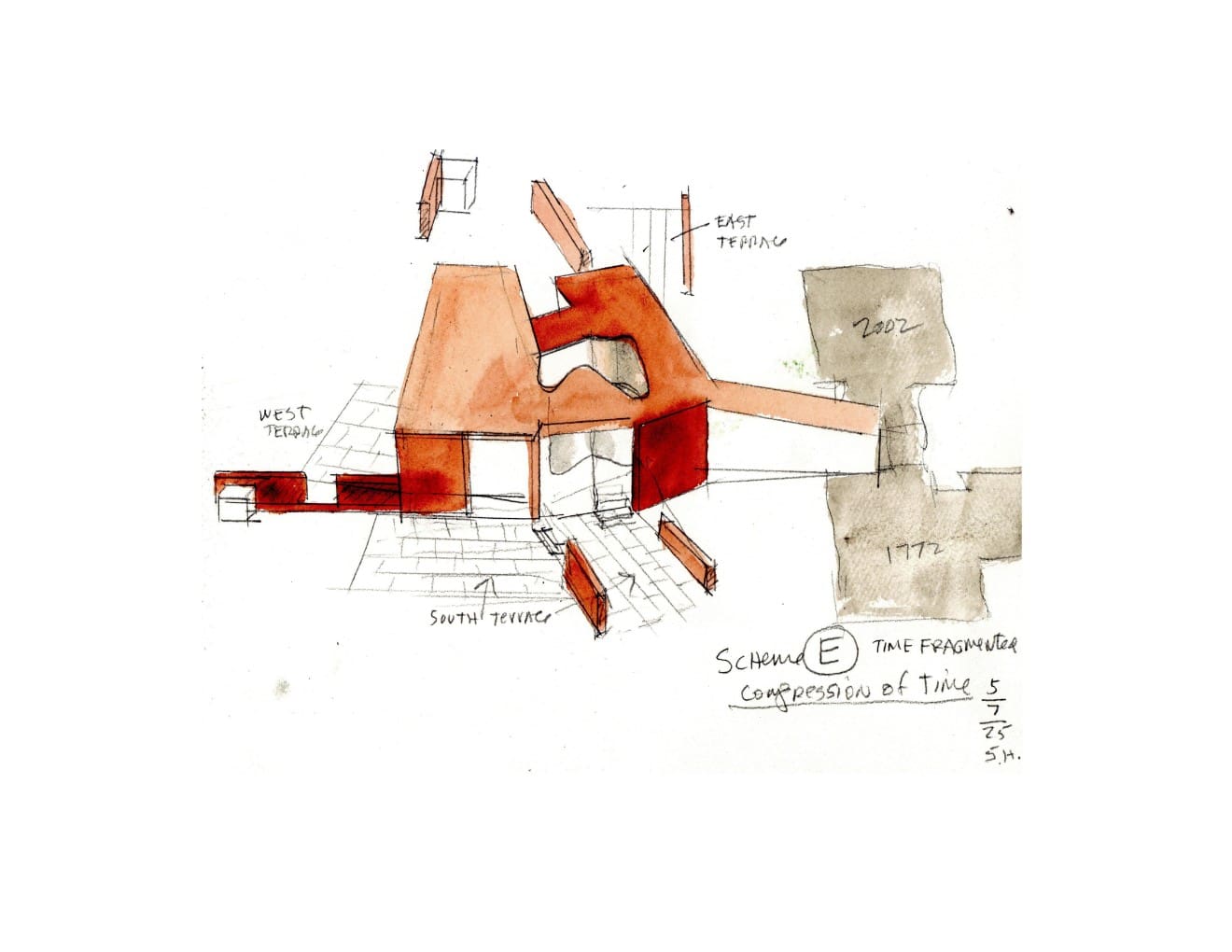
Upon arrival at the main east entry, the spatial tension between old and new becomes immediately legible. To the west, the addition unfolds in openness and light. To the south, the historic hearth room remains central to the experience—now more visibly connected through widened thresholds. To the north, the stepped passage, once the primary link to kitchen and dining, now leads to the garage and a new exercise room, both enclosed by a sliding wall to create a flexible boundary.
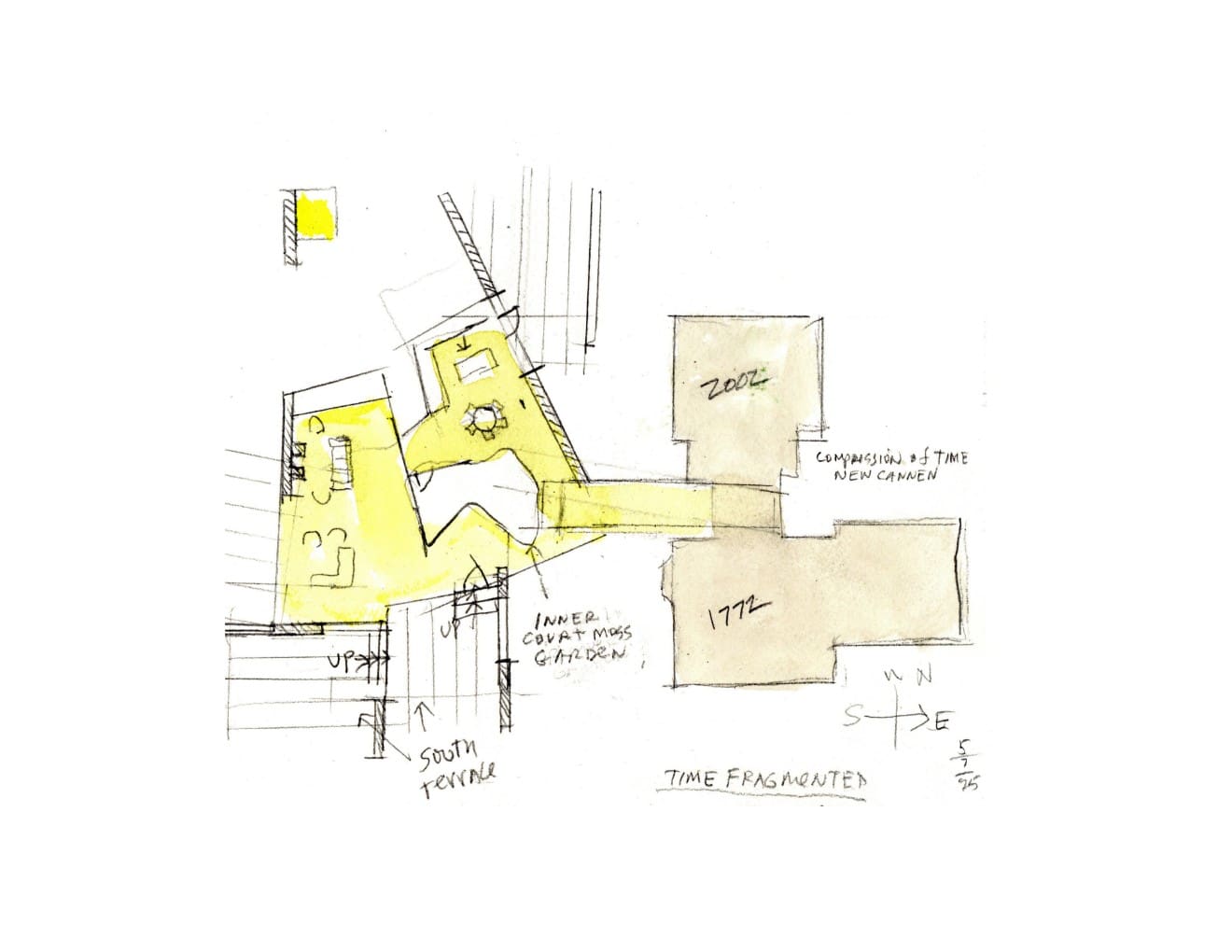
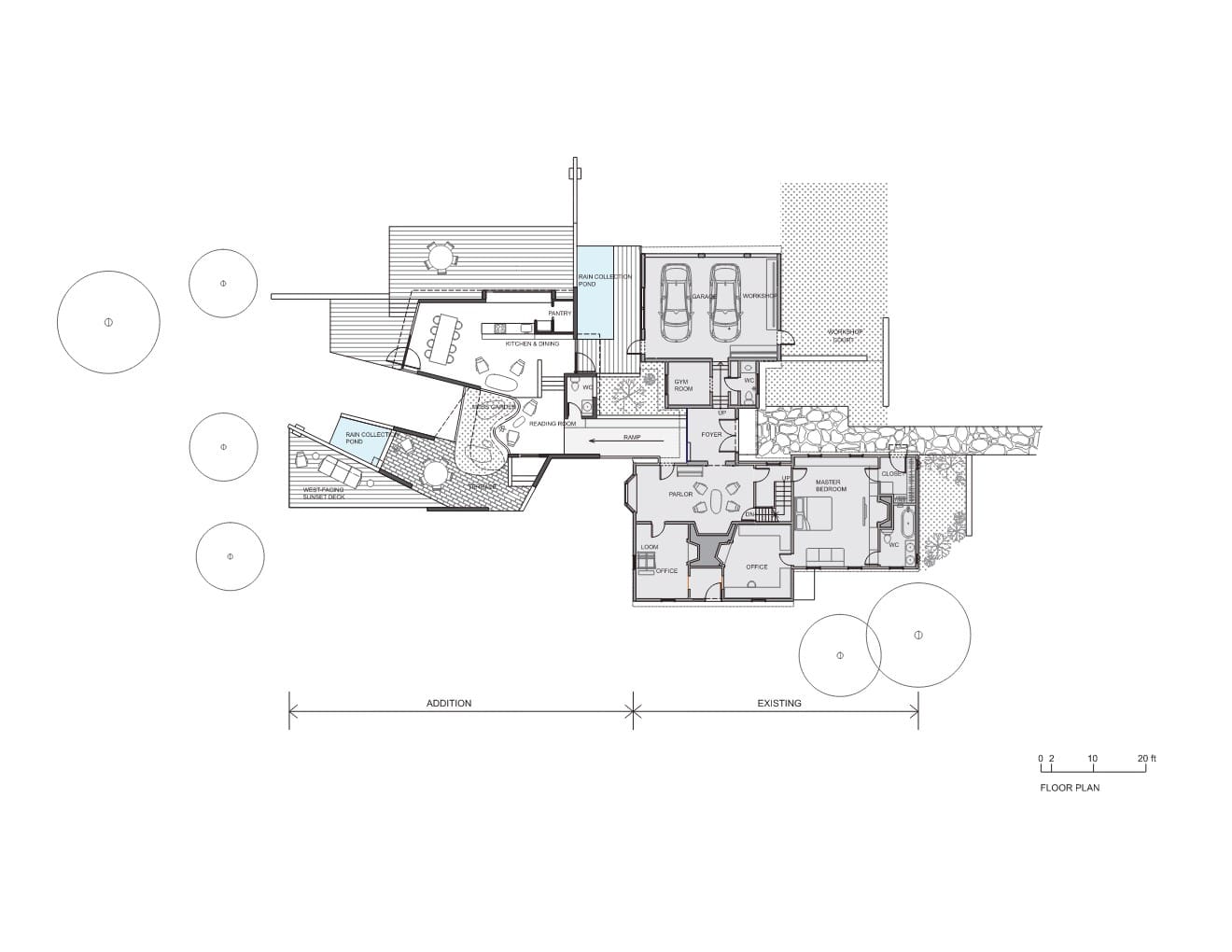
Sleeping areas remain within the historic house, with the master suite gaining ceiling height along with an expanded bathroom, laundry, and closet zone. The southeast and southwest rooms will be outfitted as office and studio spaces, reconnected through the reopened original foyer. Renovations throughout the structure will reveal original materials and improve energy performance.
Now home to a couple—living and working in the house—the design supports their daily rhythms as much as quiet moments of reflection. Reading nooks and built-in bookshelves will be integrated throughout—not confined to a single room. Custom indoor and outdoor fixed furniture will shape space across seasons, blurring the boundary between architecture and landscape.
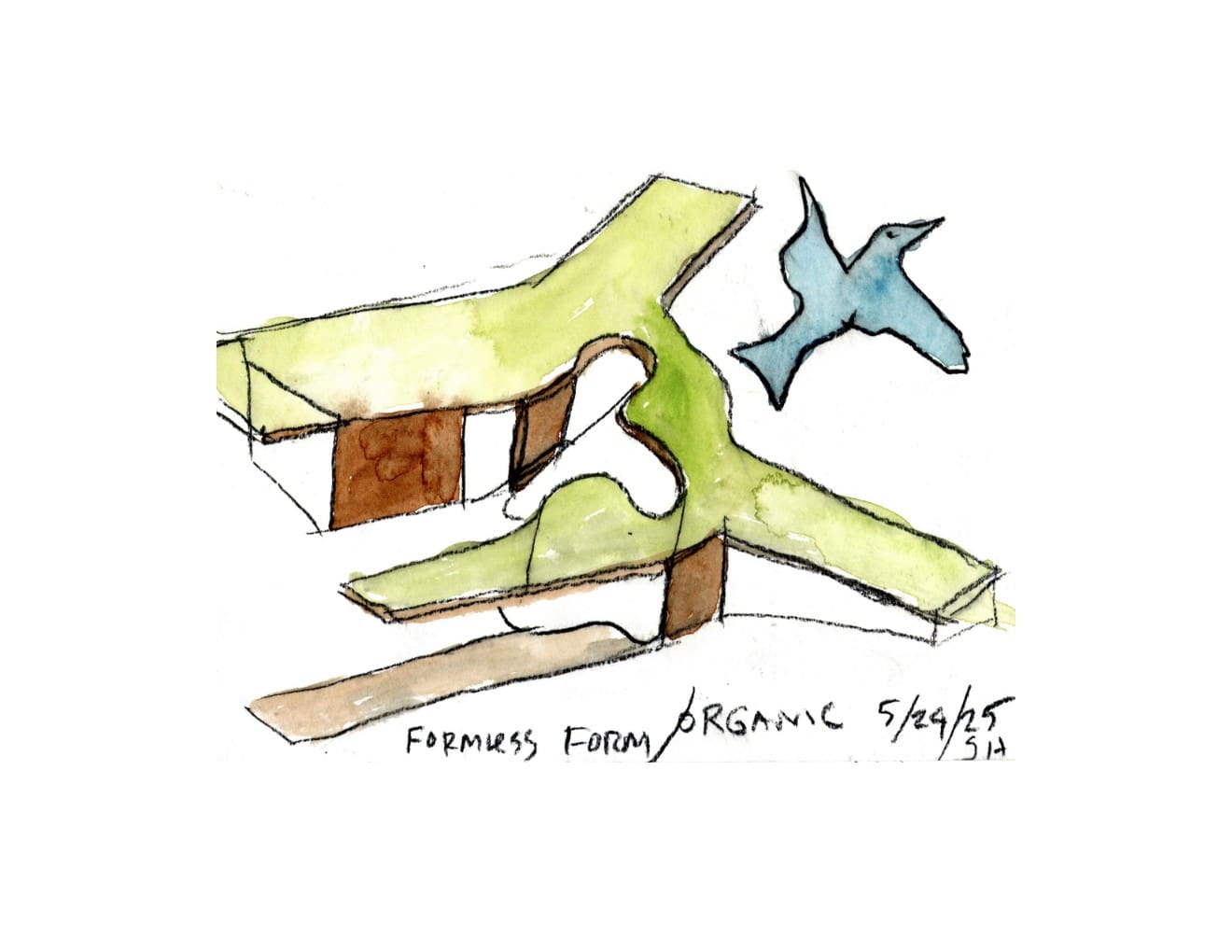
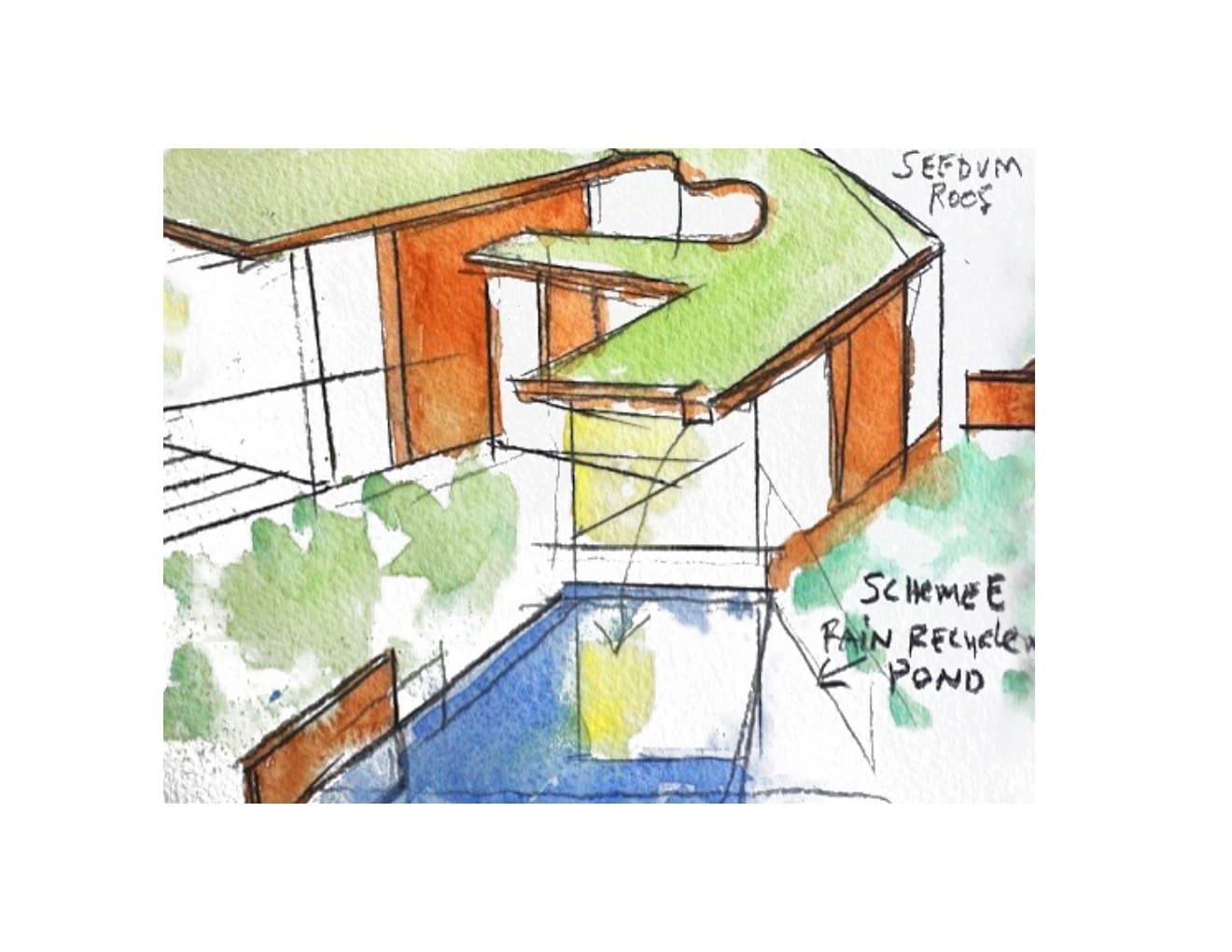
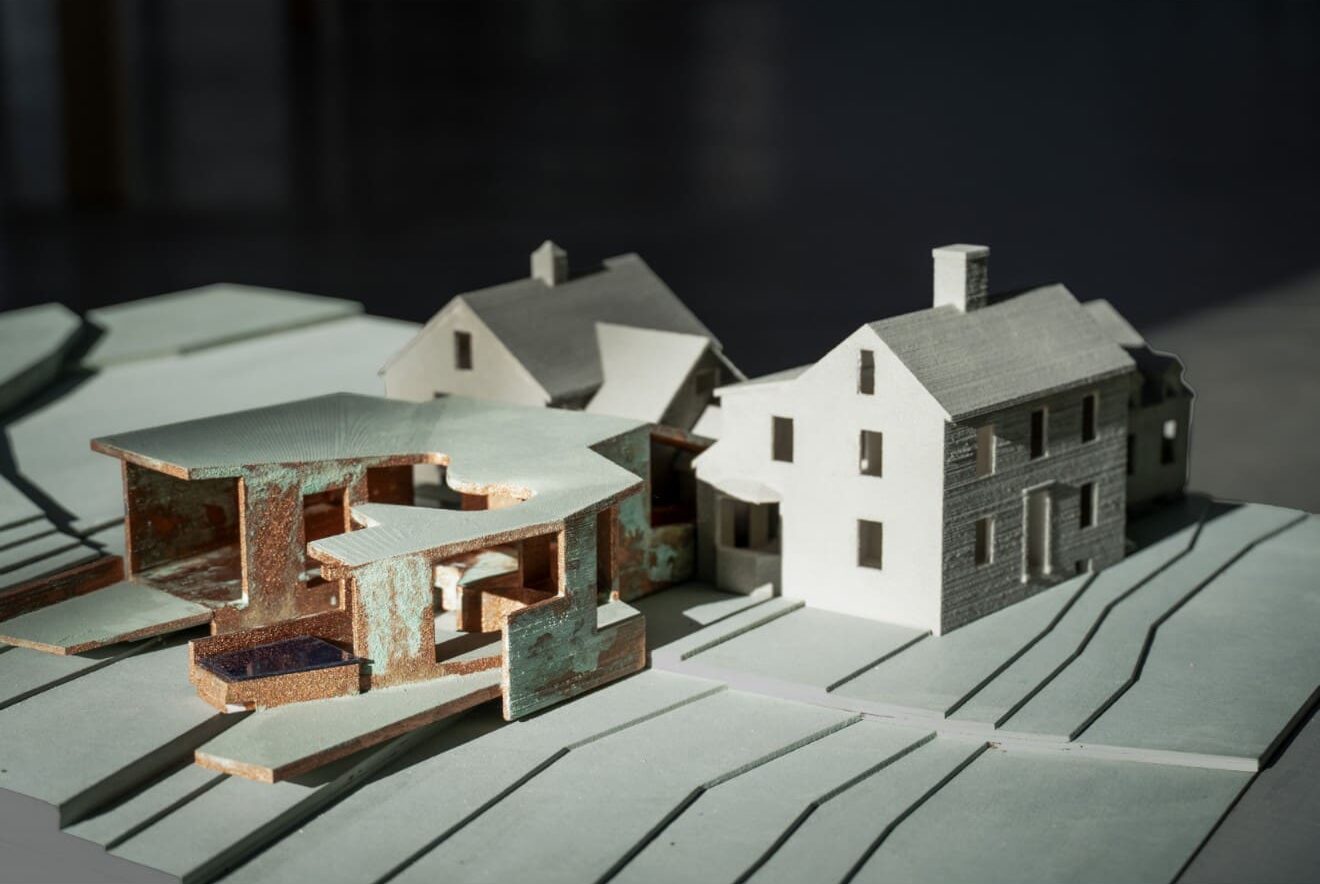
Slow space. Elastic limits. Reverie replaces compression. The ambition is to give form to the invisible dimensions of lived experience—making them perceptible through space.
Steven Holl (design architect)
Dimitra Tsachrelia (principal in charge)
Yining He (project architect)
Tamara Nasr (project team)