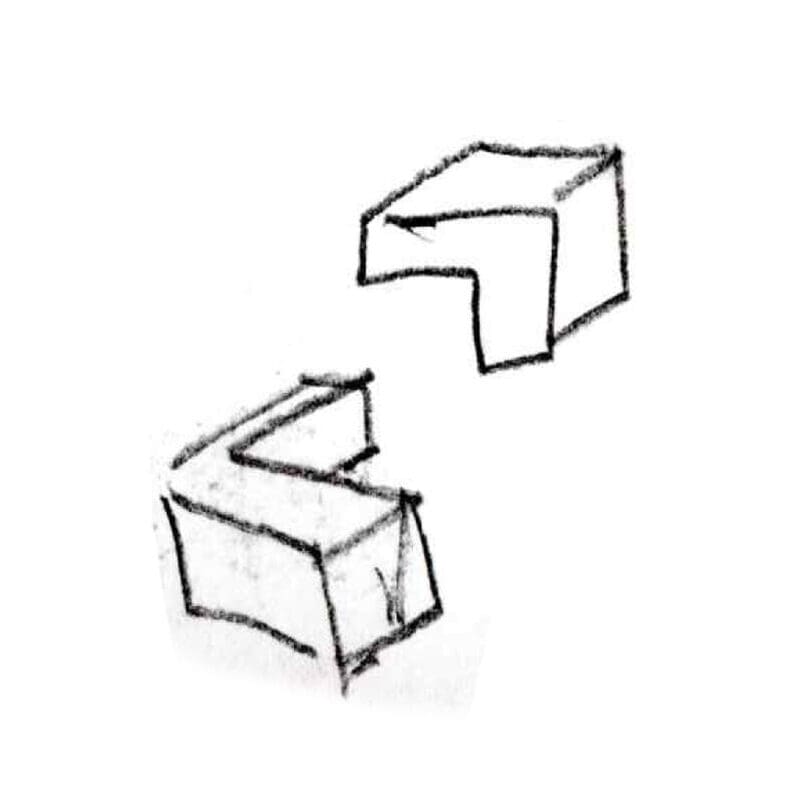
A simple ‘L’ in custom corrugated aluminum forms a south-facing green courtyard. The 1700 square-foot house proposed on a vacant lot completes the fine urban fabric of Hudson, New York.


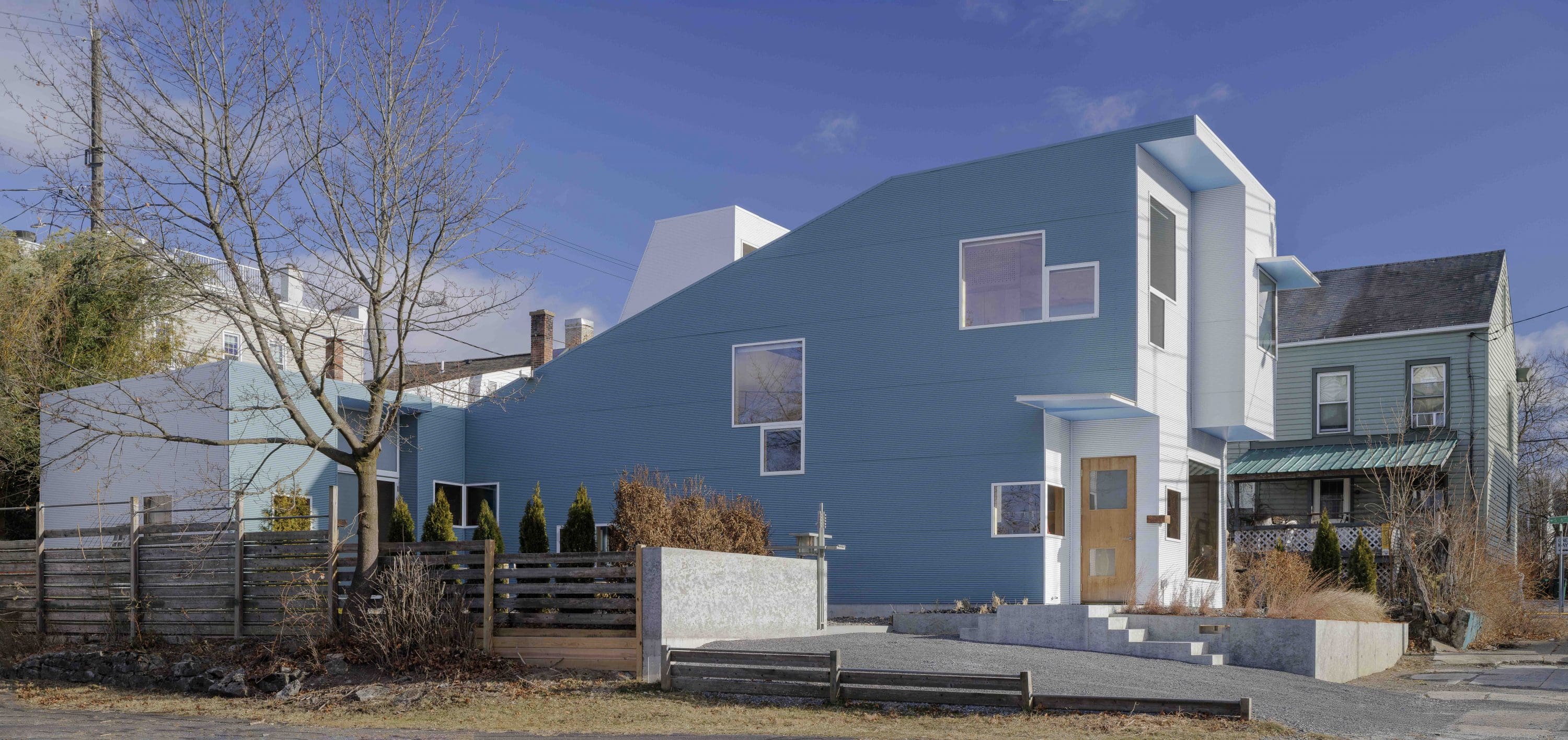
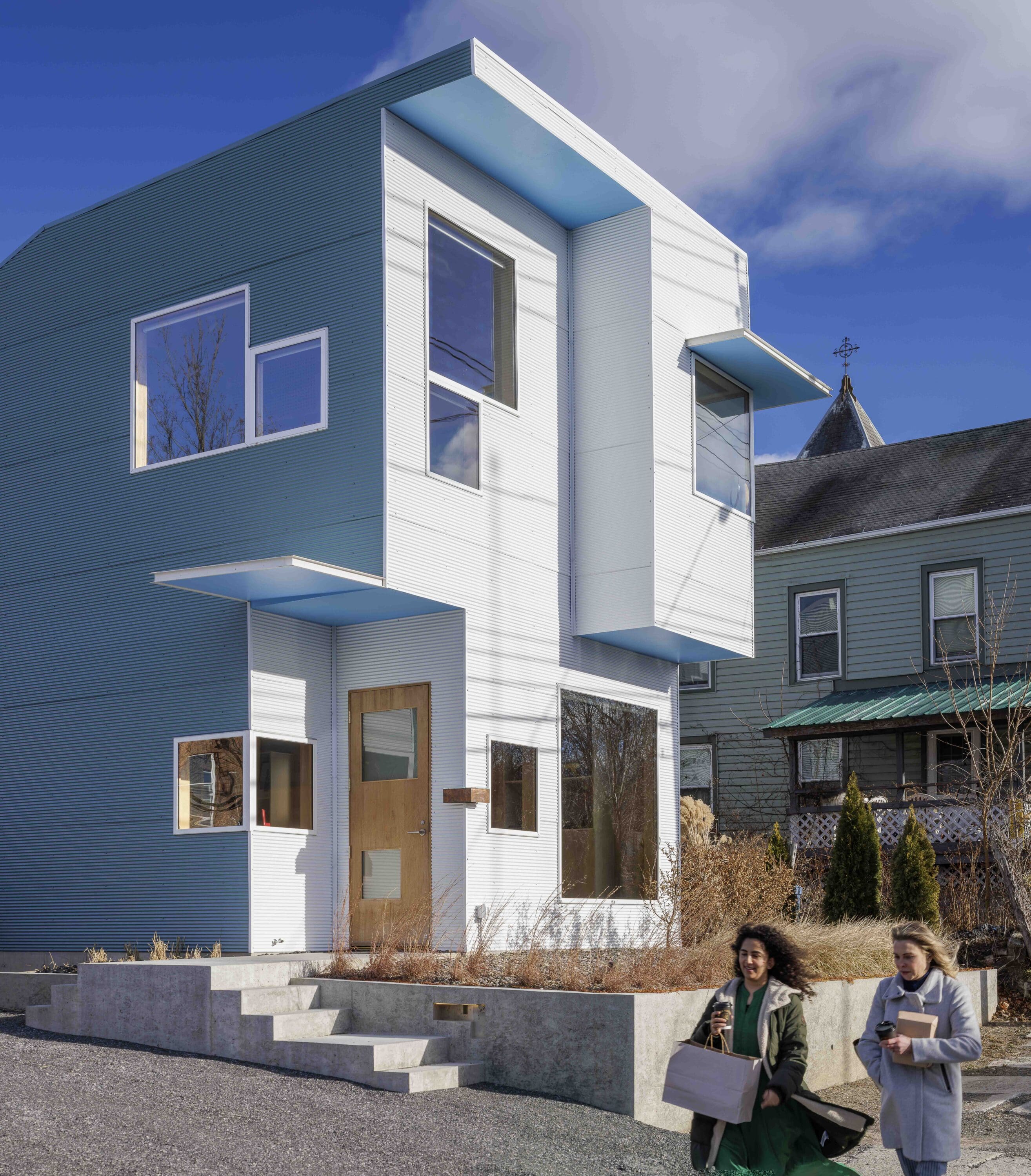


Material selection prioritized longevity, efficiency, and environmental performance. Powder-coated aluminum cladding, which contains 65% post-industrial recycled content (32.5% by weight) and birch plywood were chosen for their durability, low maintenance, and minimal material waste during installation. The building’s embodied carbon is calculated at 411 kgCO₂/m². The use of local builders and fabricators further lowers transportation emissions and supports the regional economy.


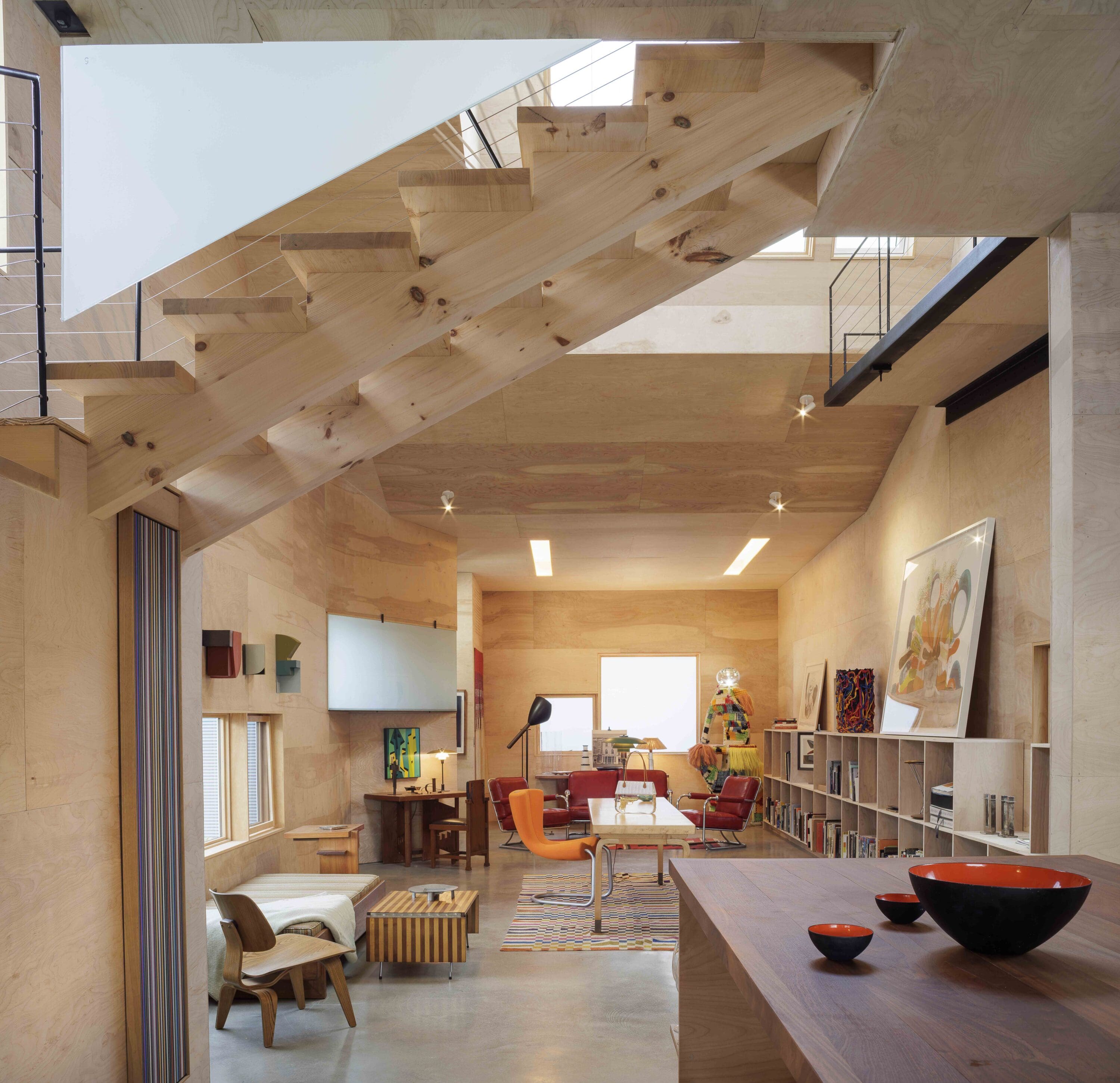
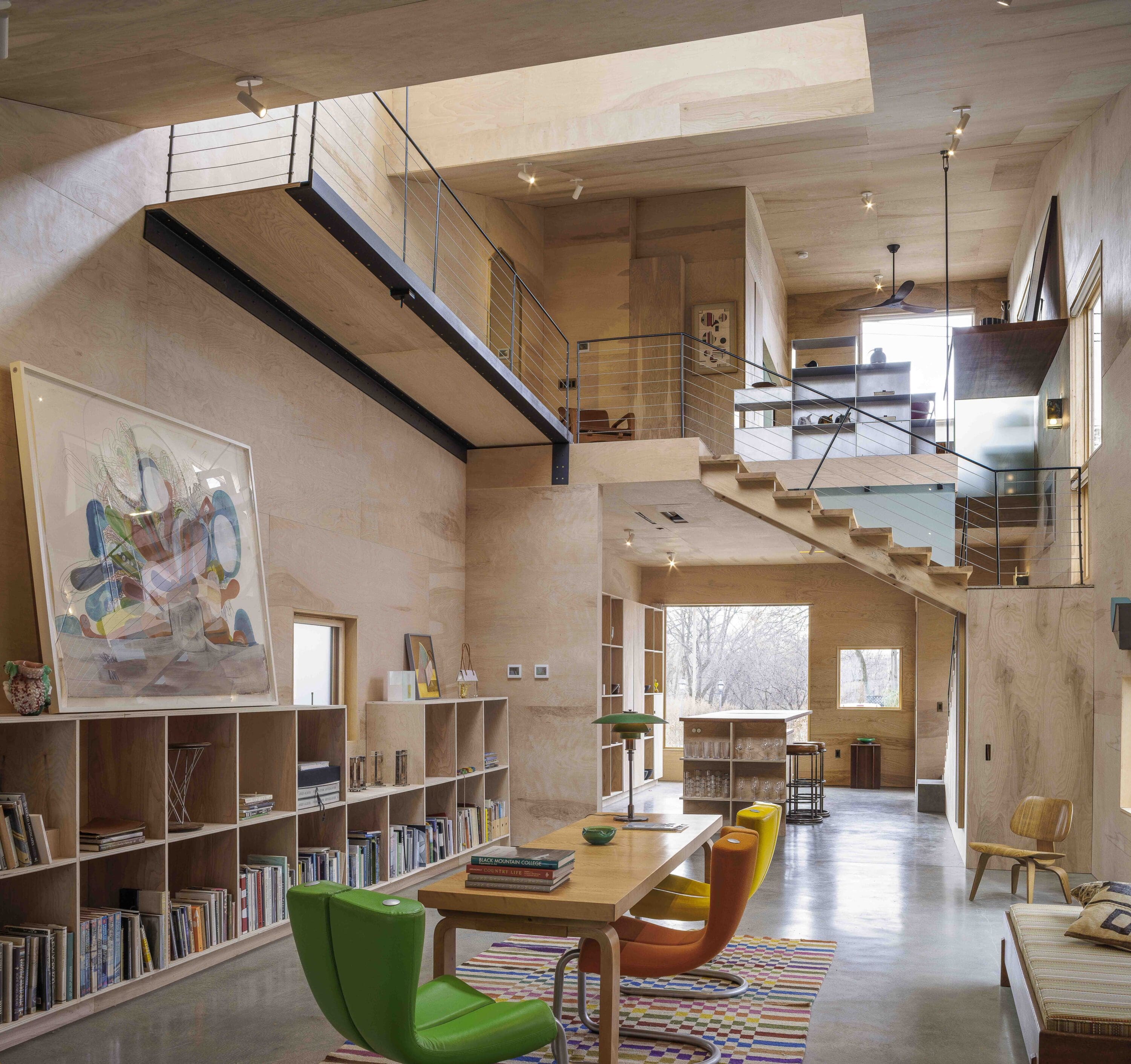
Designed as a live-work space for renowned modern furniture gallerist Mark McDonald, the house will showcase a curated collection of twentieth-century design objects by iconic architects and designers, such as Rudolf Schindler, Frank Lloyd Wright, Richard Meier, and Isamu Noguchi, among others. Birch plywood paneling covers much of the interior, offering a neutral and warm backdrop that highlights the collectible pieces and furniture.
His first gallery, Fifty/50, which opened in downtown Manhattan in 1983, jump-started the market for vintage furniture by Marcel Breuer, Alvar Aalto, the Eameses, and their contemporaries.
-Wallpaper
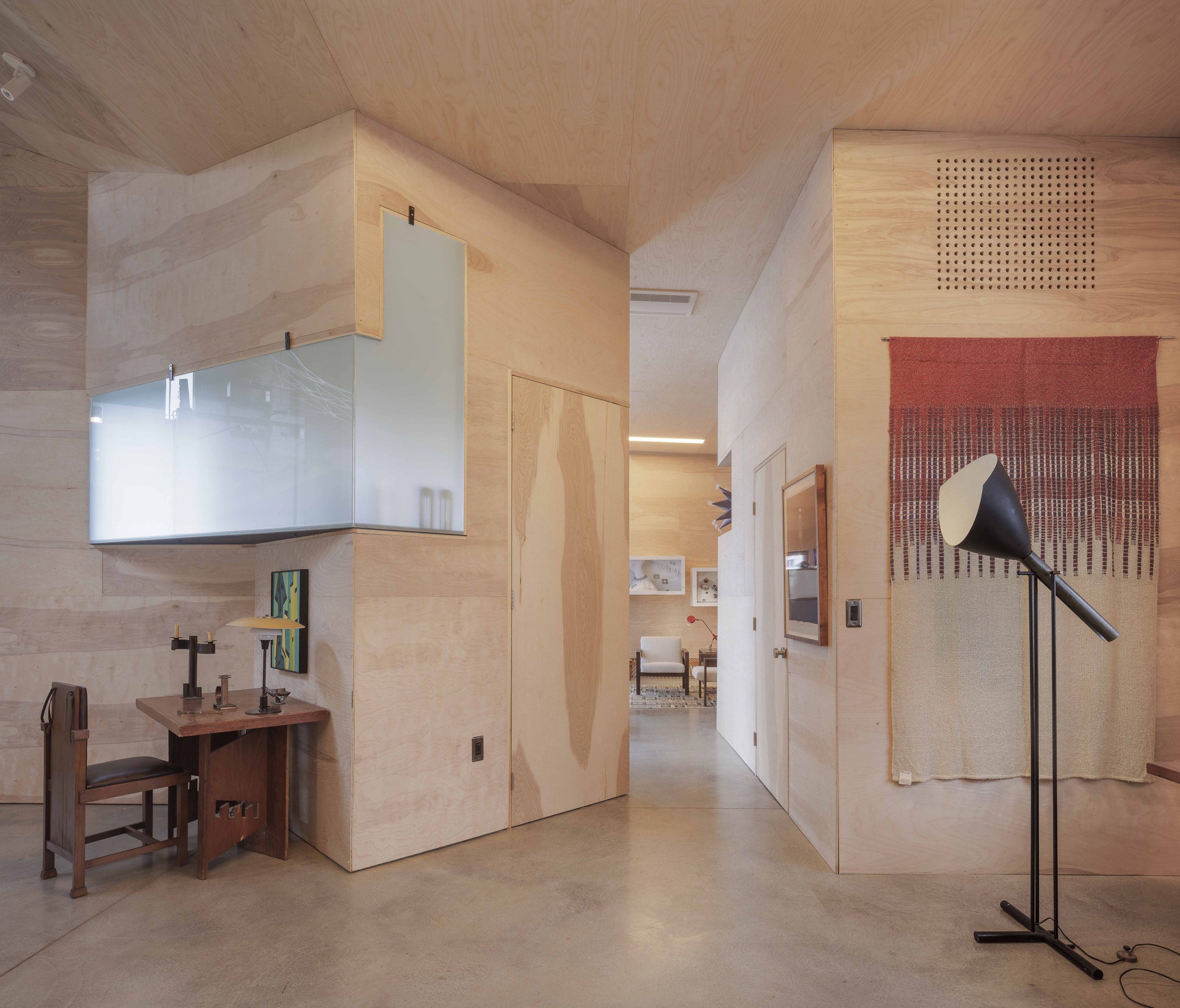

Axonometric drawing of the powder room, highlighting its rotated geometry, corner-entry door, and layered wall surfaces that deviate from the home’s rectilinear logic to form a spatial hinge.
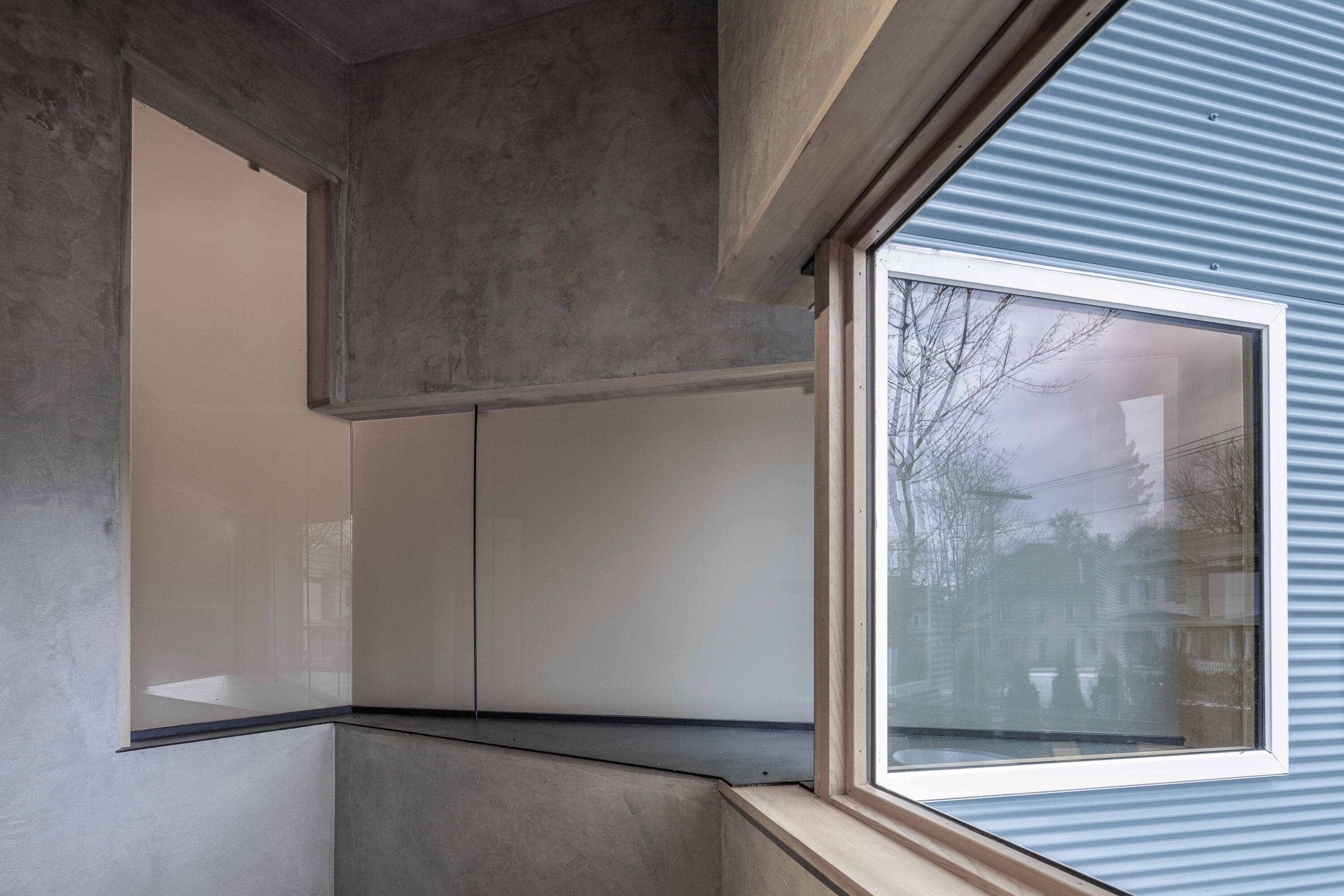
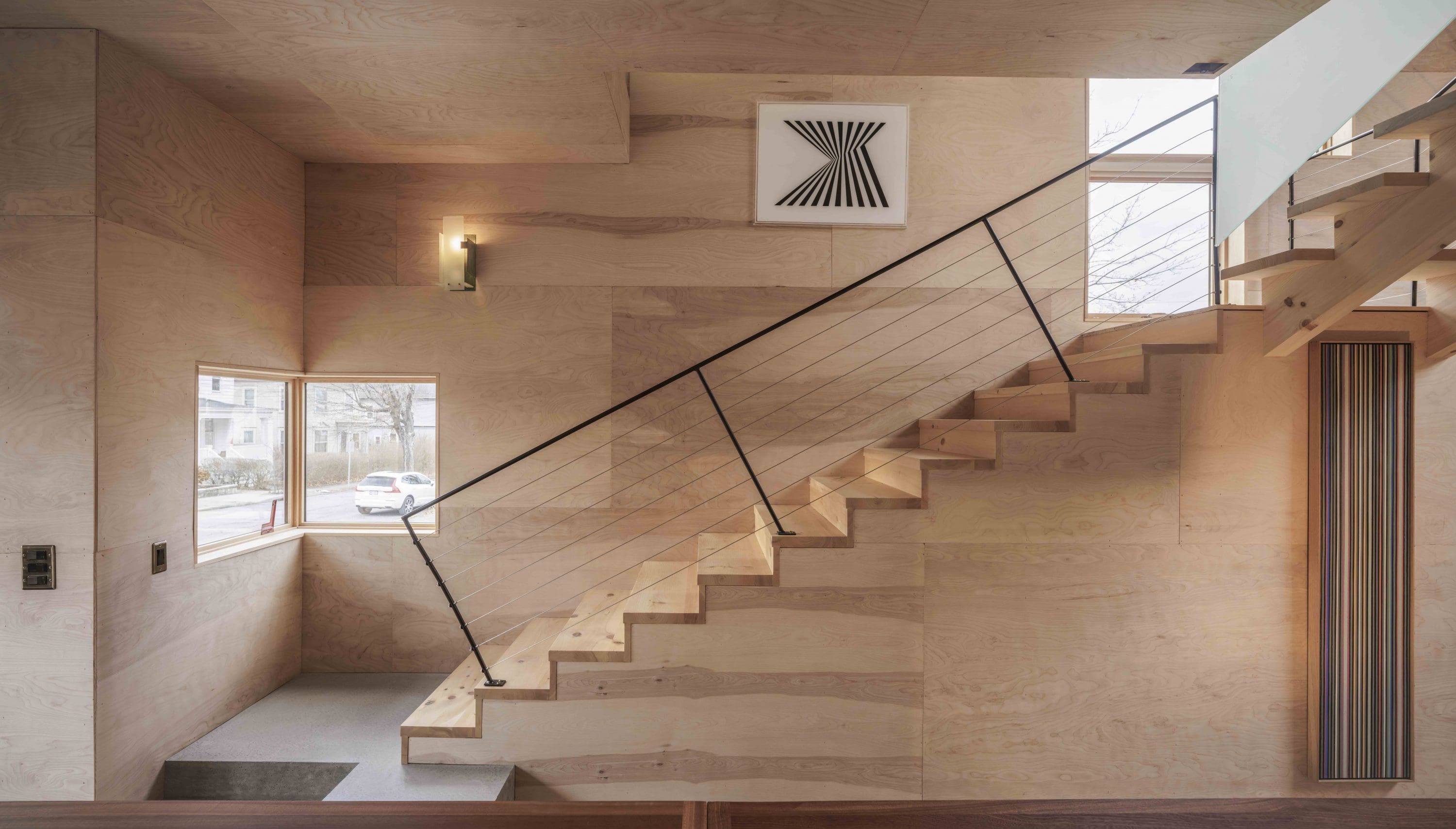
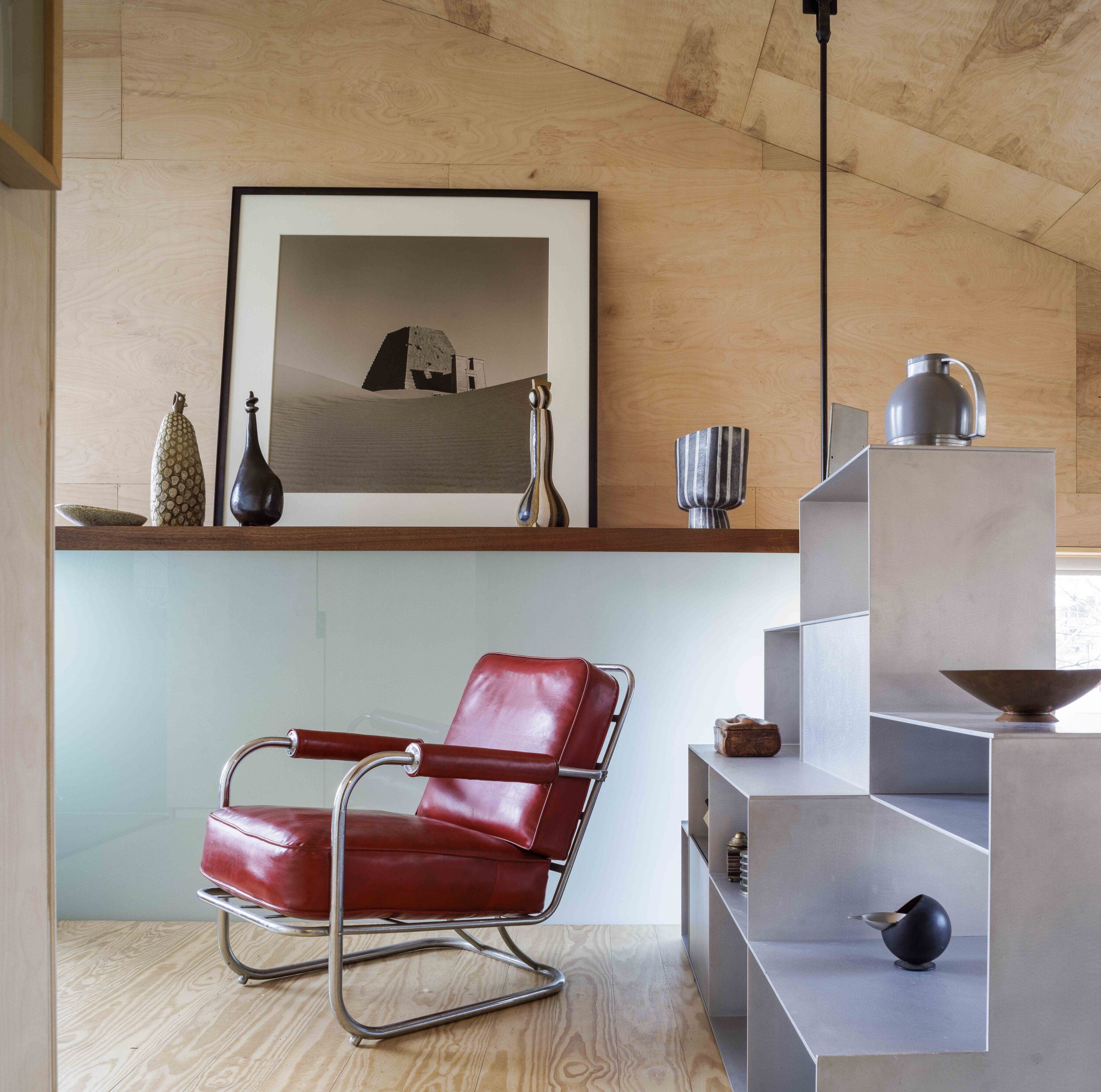
The building has an 18-foot unobstructed width, designed to maximize natural daylight and cross-ventilation. With a glazing ratio of only 11.8%, windows are strategically positioned to optimize views, maintain privacy, and enhance daylighting—achieved through a thoughtful mix of translucent and clear glazing.


Energy demand is primarily met through a high-efficiency ground-source geothermal system that supplies heating, cooling, and domestic hot water. The geothermal heat pump is powered by electricity from the local utility grid, which also supports lighting, appliances, and ventilation. No on-site renewable energy systems (e.g., solar PV) are currently installed. The building’s predicted operational energy use is 291 kWh/m²/year, while the total energy load is estimated at 274 kWh/m²/year.
The project’s whole-life carbon footprint totals 186,166 kgCO₂e (approximately 1,178 kgCO₂e/m²), placing it at the upper edge of high-performance benchmarks. The Hudson L-House exemplifies how thoughtful, flexible interiors can successfully integrate sustainability and community impact.


Steven Holl (design architect)
Dimitra Tsachrelia (associate in charge)
Yining He (project architect)
Sarah Hopper, Emmet Sutton , Michael Haddy (project team)

Topping out celebration
Timeline
-
Two SHA Short Films to Premiere in the Pacific Northwest at Seattle Design Festival
August 16, 2026
Vote for L-House in ArchDaily Building of the Year Awards!
February 2, 2026
Hudson L-House and ‘Z’ Space are THE PLAN Award 2025 Winners
November 8, 2025
Hudson L-House Shortlisted for Dezeen Award
October 6, 2025
L-House Featured in Upstate Diary No. 21
September 29, 2025
SHA to Participate in “The House Transformed” Exhibition at Princeton SoA
September 25, 2025
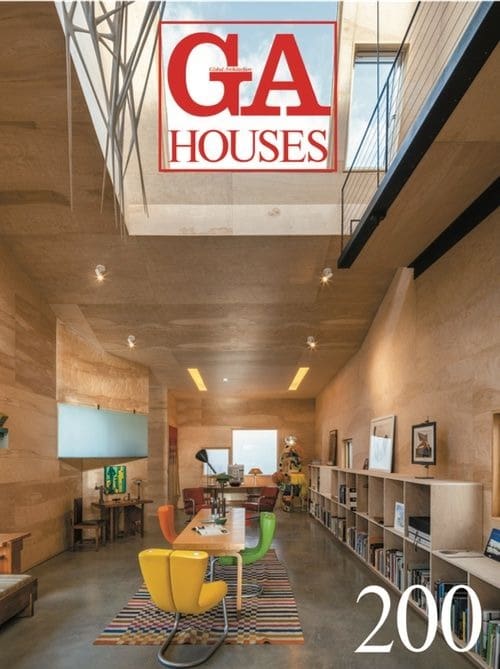
Hudson L-House Featured on Cover of GA HOUSES 200
June 25, 2025
Hudson L-House Featured in Wallpaper
March 10, 2025
Hudson L-House Solstice Celebration
June 21, 2024
Hudson L-House Construction Update
November 27, 2023